Why this topic matters to me now
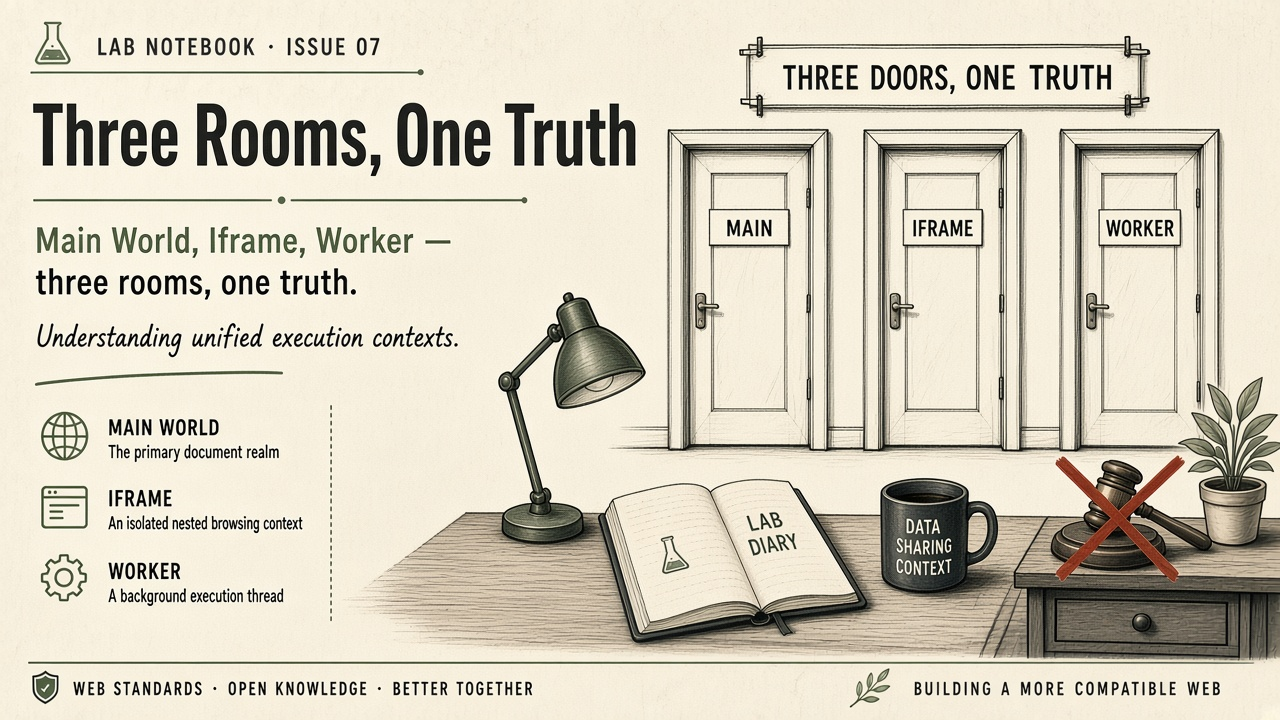
A browser is not one room. There is the main document, there is an iframe, there is a Worker. Each room has its own set of visible things and its own way to lie — to itself or to the researcher.
A patch only in top-level JS often drifts from isolated contexts. Public consistency detectors have long compared “one truth” across execution worlds. I take that mental model as a diary baseline: profile consistency is checked not in a single navigator, but in at least several rooms.
If I only fix the room I see on a public checker screen, I am building a storefront. A storefront convinces the author. It cheats the experiment.
Public frame (links)
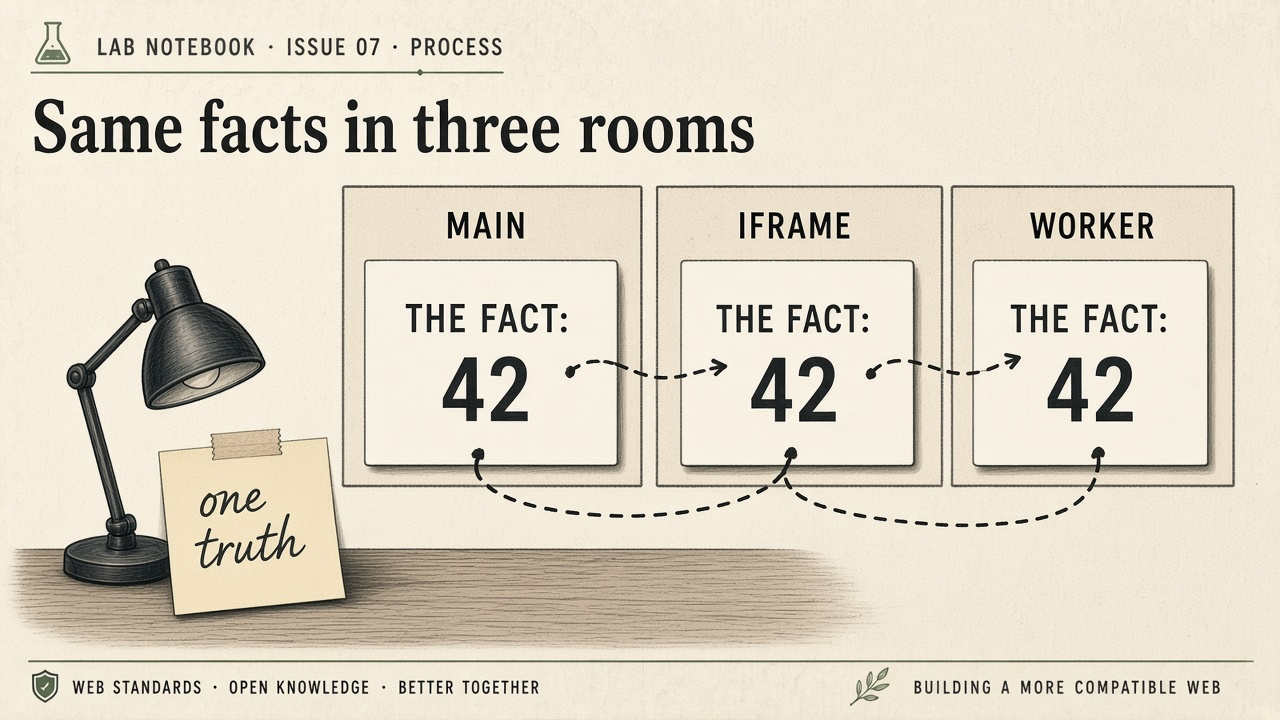
The idea of cross-realm comparison reads well on public pages like x-bot version1. Platform docs on Workers and frame isolation explain why rooms differ at all. I do not need an exploit — I need a map of rooms and honest language: “truth A here, truth B there.”
Beside that I keep the philosophy of open detect.expert materials: consistency beats one pretty field. Cross-realm is a special case of the same thought.
What I observe in the lab, in plain words
Realm in plain words
A realm is an execution context with its own global object. What is “true” in main can look different in a worker or an embedded frame — because of policies, isolation, different API availability, different init times.
This is not mysticism. It is web architecture. A researcher who pretends there is only one room saves time and buys self-deception.
Why people compare main ↔ iframe ↔ Worker
Because décor often fixes one room. The lab asks: does the neighboring room say the same? If not — I do not have a profile, I have profile décor.
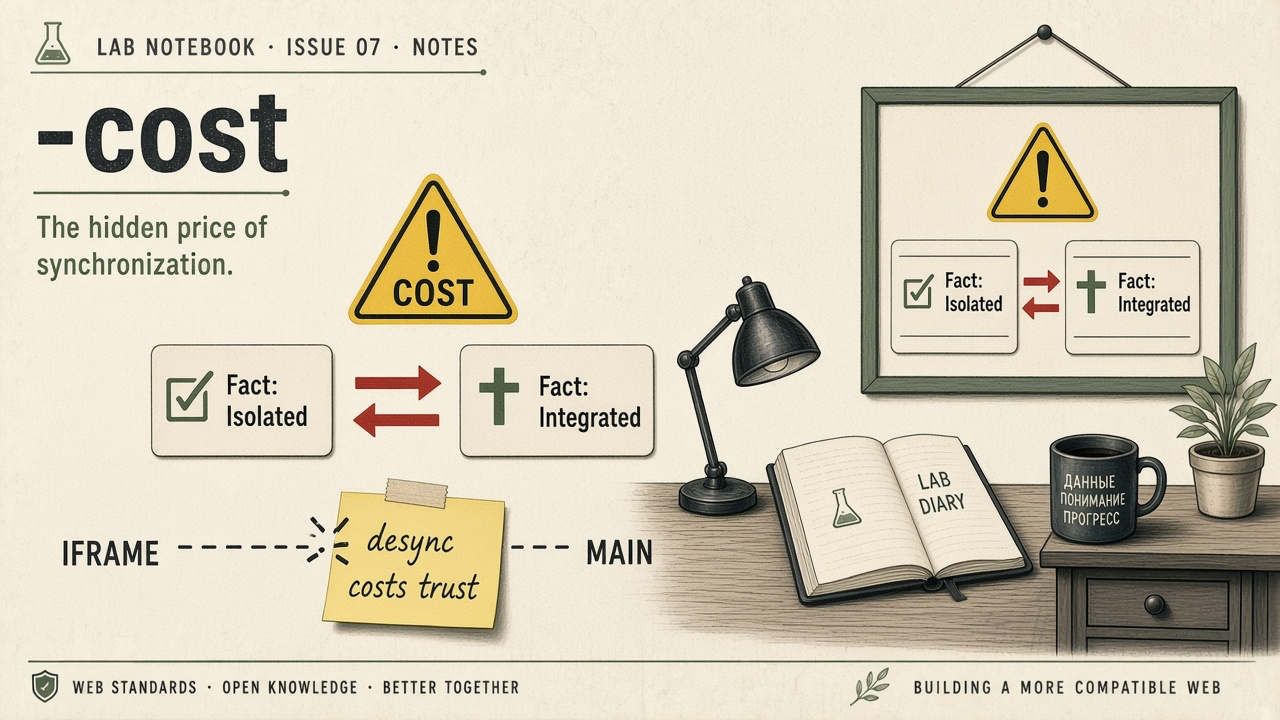
Typical picture: top-level looks consistent, an isolated context answers differently, a worker lives in its own universe of expectations. Each mismatch is not an automatic “bot” label — it is a signal to test a hypothesis.
No attack code
I describe only the model. No step-by-step isolation escapes, no recipes to “align rooms for site X.” The series’ point is literacy, not a weapon.
What this changes in detect and/or in the build (without specifics)
In detect, a contradiction between rooms is stronger for me than a single odd field. One odd field can be everyday life. A systematic argument among rooms is already a story about integrity.
In the build I check the experiment in at least two contexts before celebrating “it got greener” on a checker. If only one room turned green — I am not done.
Practically this slows “wins” and speeds the death of bad hypotheses. That is what I need.
What I will not say, and why
I do not publish sandbox escape techniques or recipes to align rooms for a specific antifraud stack. I do not reveal internal signal names. The charter’s red line is direct: layer literacy — yes; help with abuse — no.
Short first-person takeaway
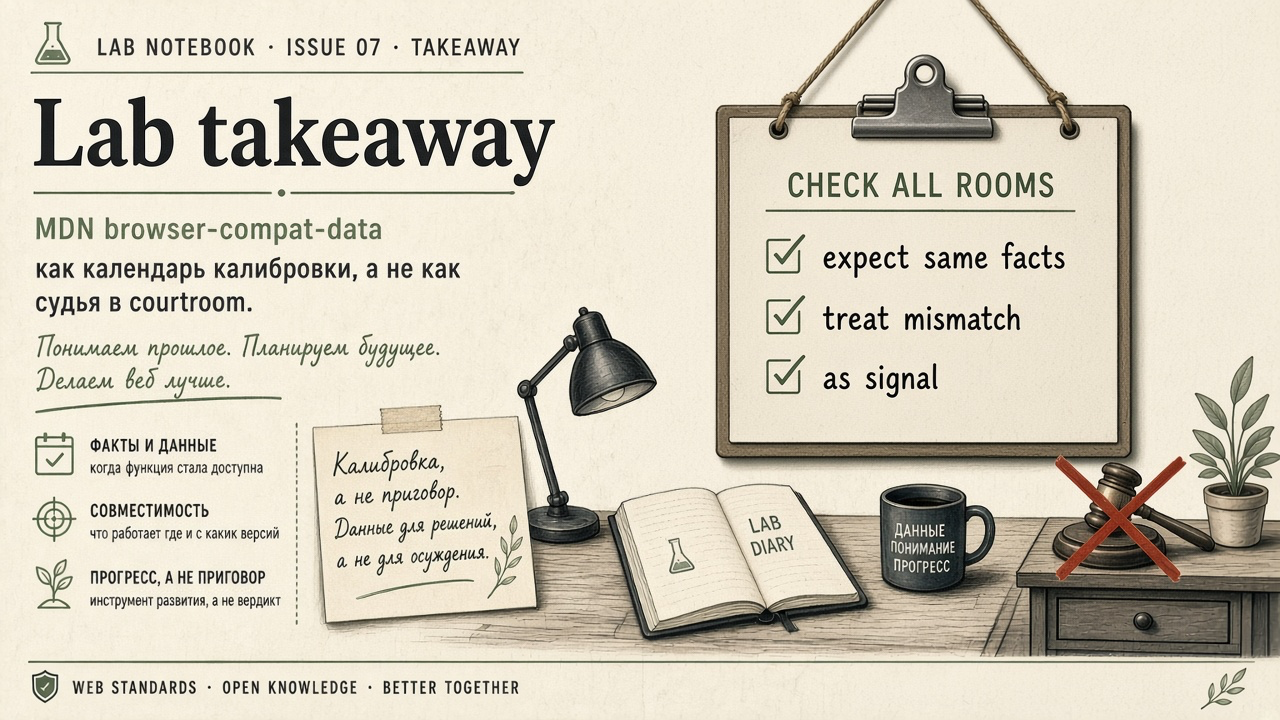
One truth in three rooms is a good test for self-deception. If rooms argue, the profile is not consistent yet — even if one of them is pretty. I keep the room map next to the lab’s two mirrors.