Why this topic matters to me now
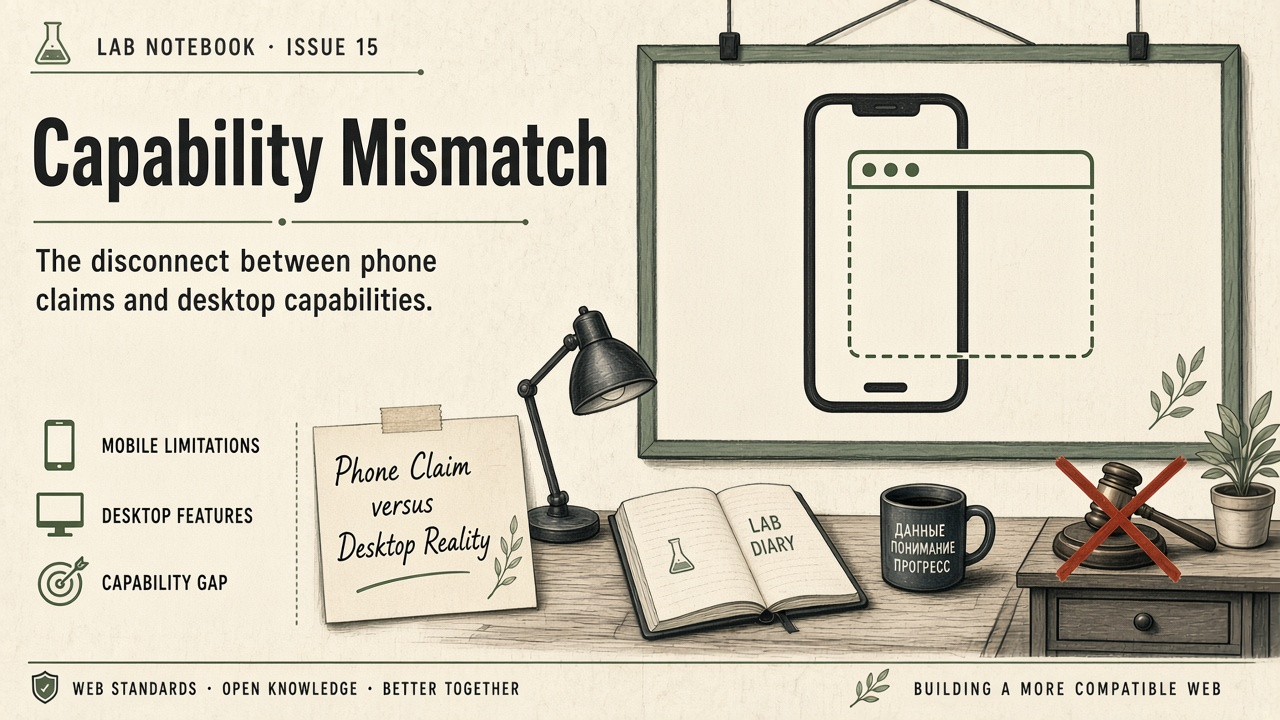
There is a class of contradictions: the client claims mobility, while capabilities and behavior look more like a desktop — or the reverse. A mobile claim and a desktop-capability surface are a classic consistency problem.
Both detect researchers and bypass researchers love this. In a public diary the topic must stay ethical: name the class, do not hand out probes.
Public frame (links)
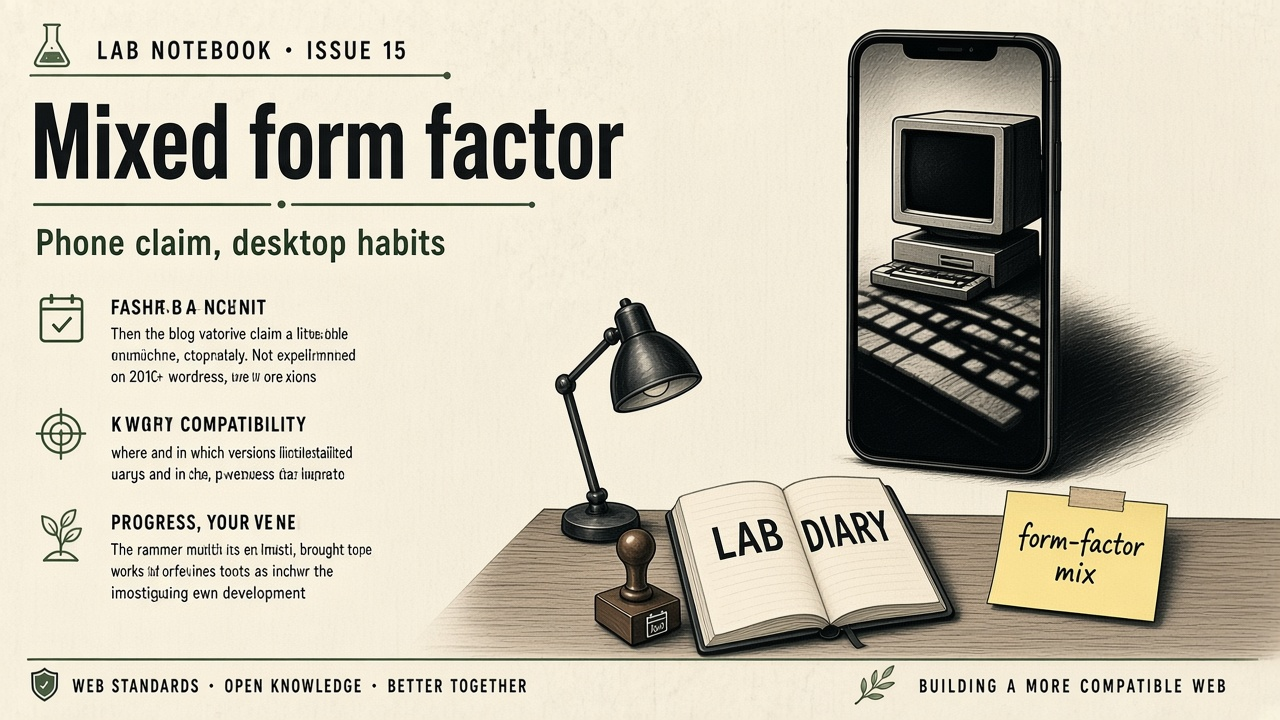
Form factor and capability are discussed in platform docs and UA-CH. Alternative engines on iOS in the EU (Apple) further break naive rules like “platform ⇒ single engine.”
What I observe in the lab, in plain words
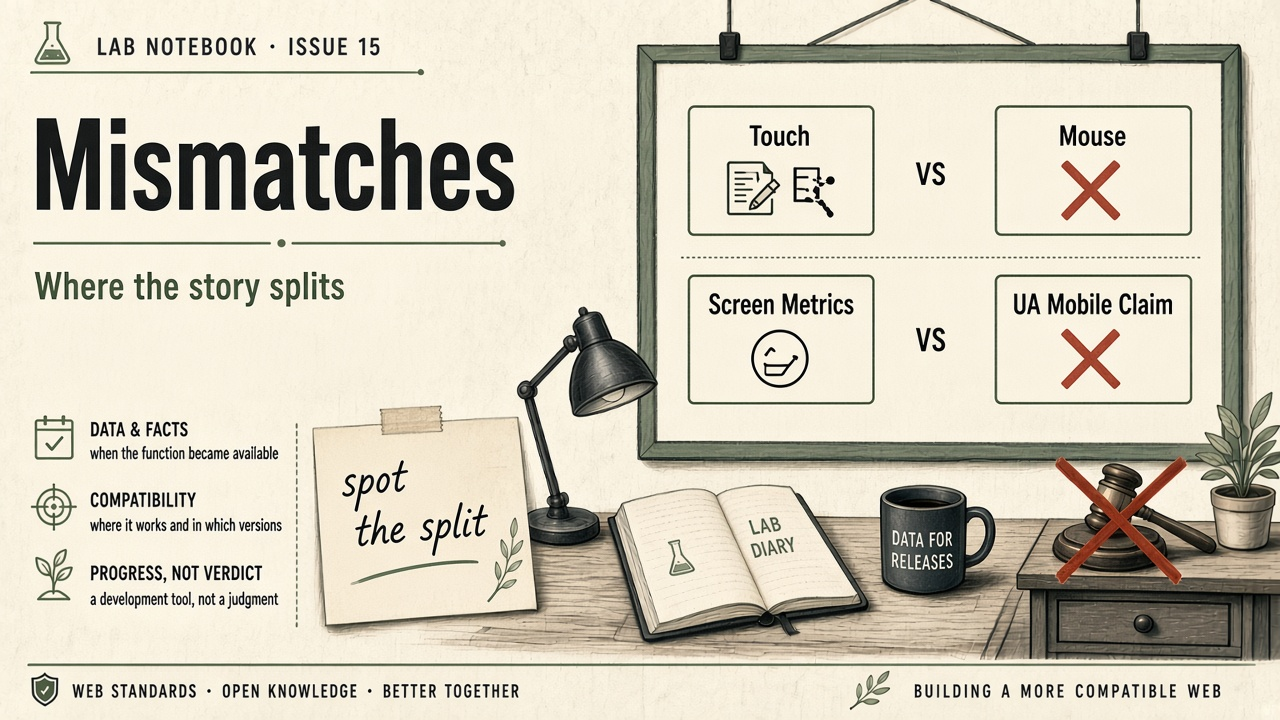
Mobile-claim vs desktop-capability
Claiming “I am a phone” creates expectations for surface and behavior. If those expectations systematically break, that is a layer contradiction — a good diary object. Not a person-label by itself — contradiction first.
Why both sides love the topic
Because it sits at the joint of claim and measurement. That joint is exactly what the series studies. It is easy to slide into a guide on “how to look like a phone.” I do not do that.
Ethical framing
I talk about the class of contradictions. I do not publish internal probes. I do not turn the text into a bypass checklist. Readers only need to see which question to ask themselves in the lab.
What this changes in detect and/or in the build (without specifics)
Detect phrases it as “form-factor claim does not match capabilities.” The build checks whether it is assembling phone décor with desktop truth in the next room.
What I will not say, and why
No internal probes and no guide on “how to look like a phone.”
Short first-person takeaway
Form factor is a claim too. I check it with measurement and leave probe details behind the red line.