
Search optimization is not magic — it is a complex system of algorithms. To understand how the Google engine judges page relevance, you need to study SEO ranking factors. They split into on-site, off-site, and behavioral. In this article we break down what actually affects the SERP and how that applies across surfaces, from classic sites to marketplaces.
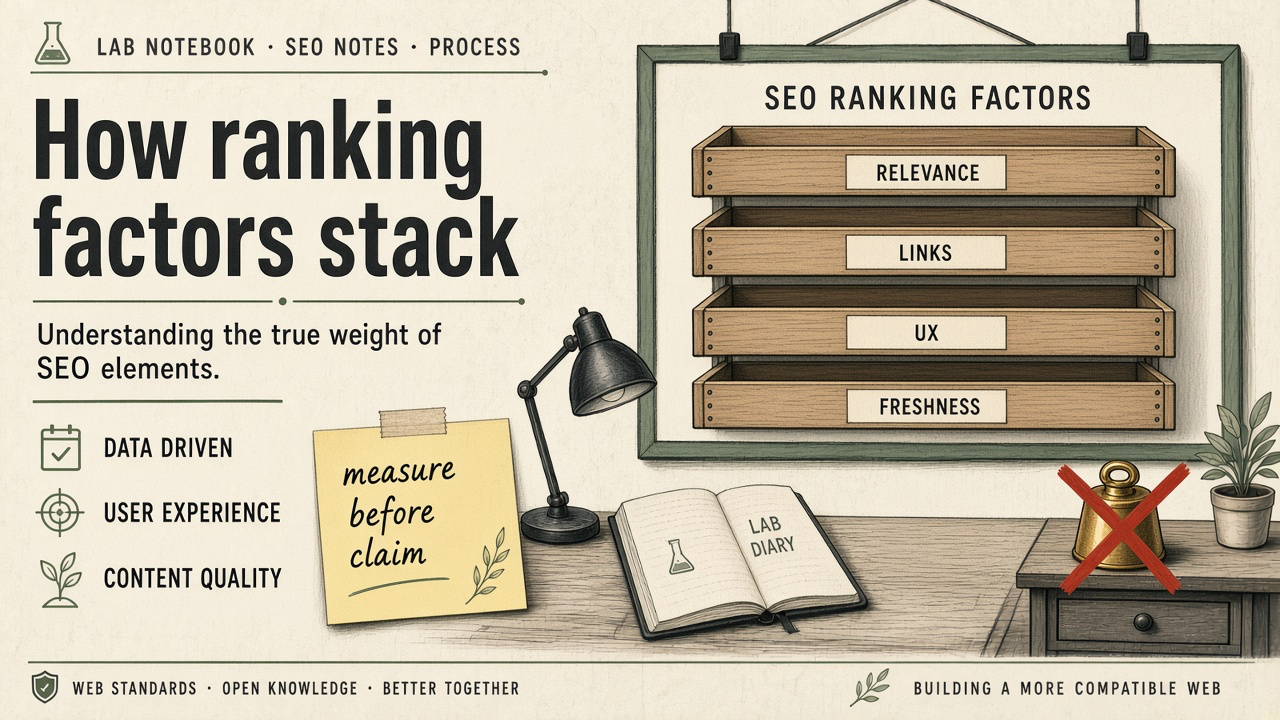
Main factor groups
The basic operating principle of search engines is the same for Google, Yandex, and others. Still, Yandex ranking factors can have their own nuances tied to local results and ecosystem services. For global analysis people most often rely on Google standards. Technical ranking factors of a site are the foundation. Without fast loading, correct indexing, and responsive layout, content will not matter. The engine values stability and server response speed.
Content and semantics
Text factors remain critically important. Algorithms analyze query match, keyword density, and depth of topic coverage. Remember that search engine ranking factors evolve. Today it is not enough to stuff text with keywords; you need natural structure, headings, and logical exposition. For commercial queries algorithms look for commercial ranking factors of a site, such as contacts, prices, and reviews. Understanding what commercial ranking factors are helps a business convert traffic better.
Marketplaces: WB and Ozon
Product-card ranking logic is similar to websites but has its own specifics. Many sellers search for information on WB ranking factors or Wildberries ranking factors. Delivery speed, seller rating, and attribute completeness play a key role here. Wildberries product card ranking factors include not only text but visual appeal, video, and answers to questions. Likewise, Ozon ranking factors depend on logistics metrics. If you study WB ranking factors 2026 (or current 2024–2025 data), pay attention to pricing automation and participation in promotions. Queries like ranking factors for a card on WB are also popular, because sellers want to know which factors affect card ranking in their niche.
External signals and links
Backlinks still matter, but quality beats quantity. Algorithms analyze domain authority influence. Site ranking factors include a link profile that should look natural. Search engines actively fight spam, so buying links from low-quality directories can hurt. It is important to watch site ranking factors in a broad sense, including brand reputation in social media and mentions.

Behavioral factors
Google does not disclose the exact weight of behavioral metrics, but they clearly affect the SERP. Time on site, depth of view, bounce rate — all are indirect signals. User experience (UX) has become a priority. If visitors leave a page quickly, algorithms may lower its significance. The same applies to card ranking factors on marketplaces, where a high return rate or negative reviews lower a product’s position.
Practical tips
- Optimize page load speed.
- Create unique, useful content.
- Set up correct structured data markup.
- Watch for technical errors in Google Search Console.
- For marketplaces, fill all attributes and maintain the rating.
Do not look for a magic wand or Ashmanov ranking factors (likely a search typo, but the point is hunting for secret methods). SEO is systemic work. Also do not confuse SEO with office-suite tools. Queries like how to do ranking in Google Sheets or how to do ranking in a Google Form refer to software sorting features, not search optimization. Ranking in Google Sheets is row sorting, and how to make ranking in a Google Form is about response-processing logic. Those topics are unrelated to SEO.
Conclusion
Success in the SERP depends on a comprehensive approach. Study search ranking factors, adapt strategy to your niche, and watch algorithm updates. Whether site ranking factors or Wildberries ranking factors, the principles stay the same: quality, speed, and user experience.