Why this topic matters to me now
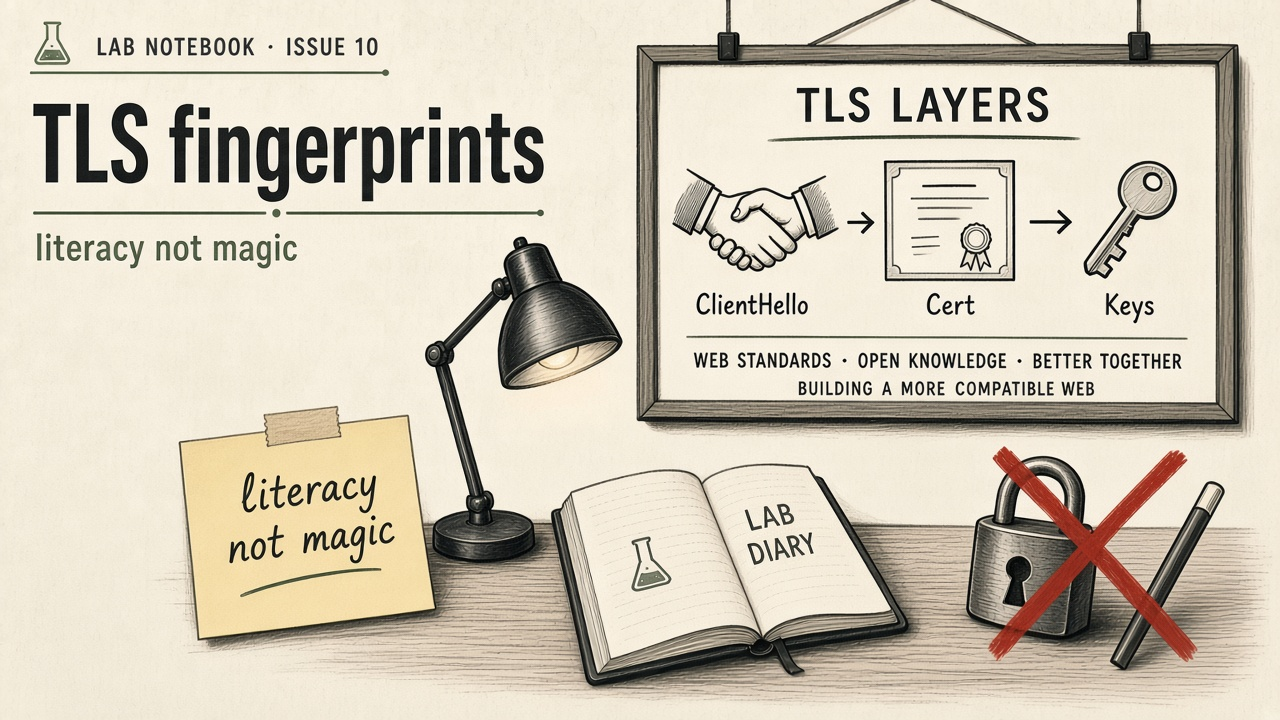
TLS fingerprints sound like magic from the next room: JA3 and its heirs, libraries, “the wrong ClientHello.” In open literature the layer has long been described. My job in this series is literacy — not a cult and not a tuning guide.
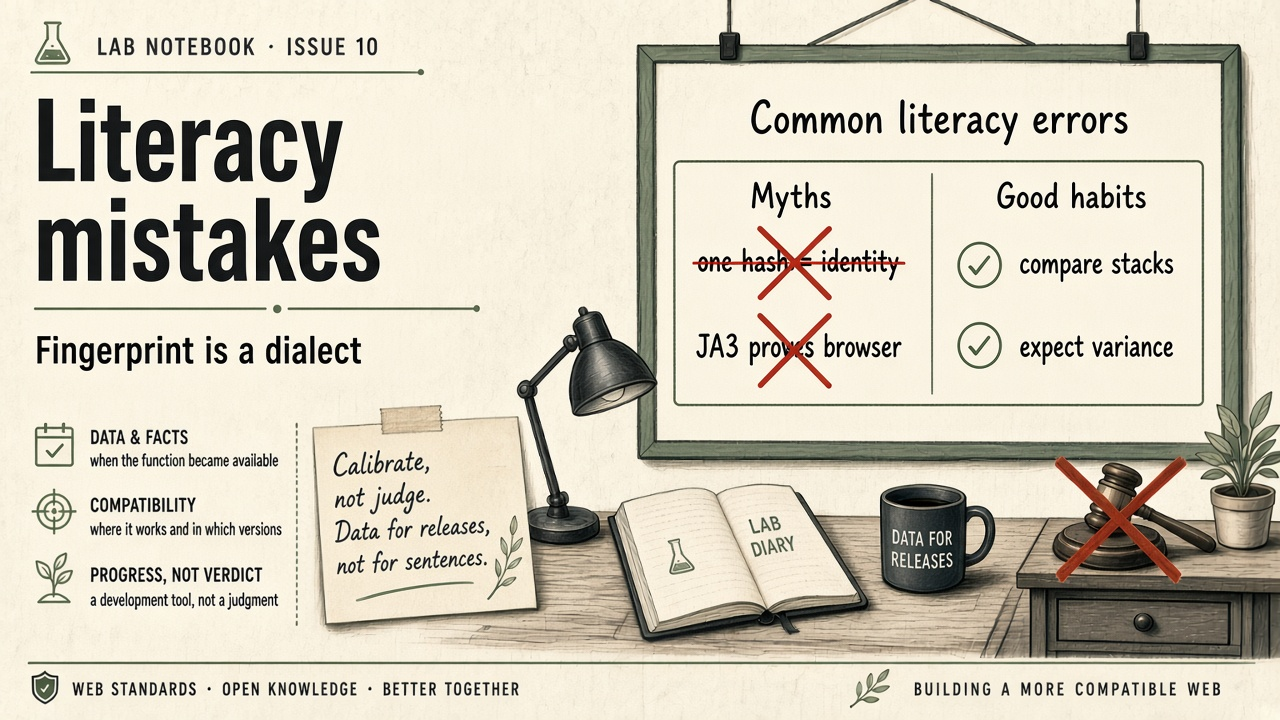
One fingerprint without the rest of the stack is a fragment. A fragment is useful. A fragment is not a novel about a person’s intent.
Public frame (links)
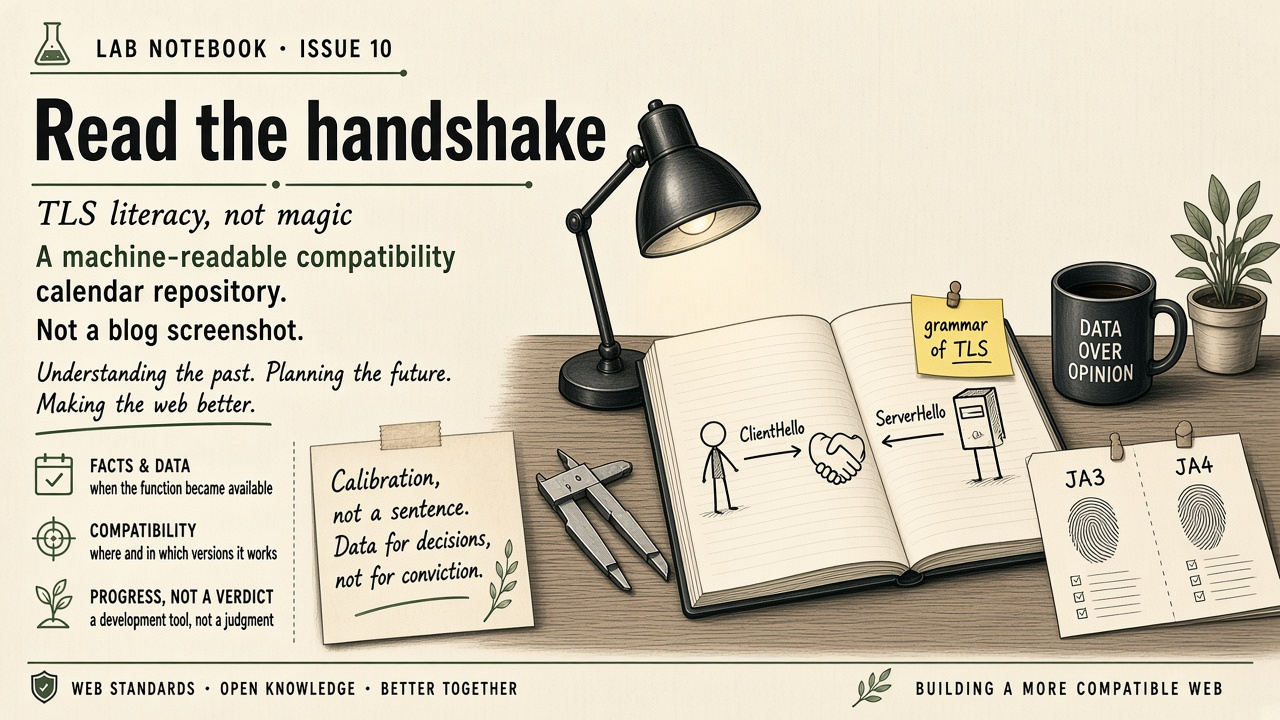
A public entry point is research like JA3. Next to it — understanding that a browser stack and scripted HTTP clients live different lives. Chromium sources remind me: the handshake is a property of a concrete program, not of a “user’s soul.”
What I observe in the lab, in plain words
In plain terms
A client presents itself with a set of handshake parameters. The set can be learned, compared, clustered. That is a transport-layer signal — not proof of intent and not a substitute for JS-surface consistency.
Why libraries and browsers differ
Because they are different programs. Being surprised by the difference is normal. Turning the difference into an automatic “bot” label is already interpretation — and often a crude one. Everyday VPN, corporate MITM, a weird middlebox — all of that also moves the picture.
Stack over talisman
TLS without the JS surface, without behavior, without network context is a weak story. I keep the layer in an ensemble. The ensemble can raise uncertainty. It rarely should deliver a verdict alone.
What this changes in detect and/or build (no specifics)
Detect: keep TLS as a context layer. Build/research: do not set a public goal of “tune the handshake to brand X.” Understanding why stacks differ — yes. Publishing a bypass recipe — no.
What I will not say, and why
The charter ethics are direct: I do not publish “how to tune TLS for a site.” Literacy — yes. Bypass guide — no.
Short first-person takeaway
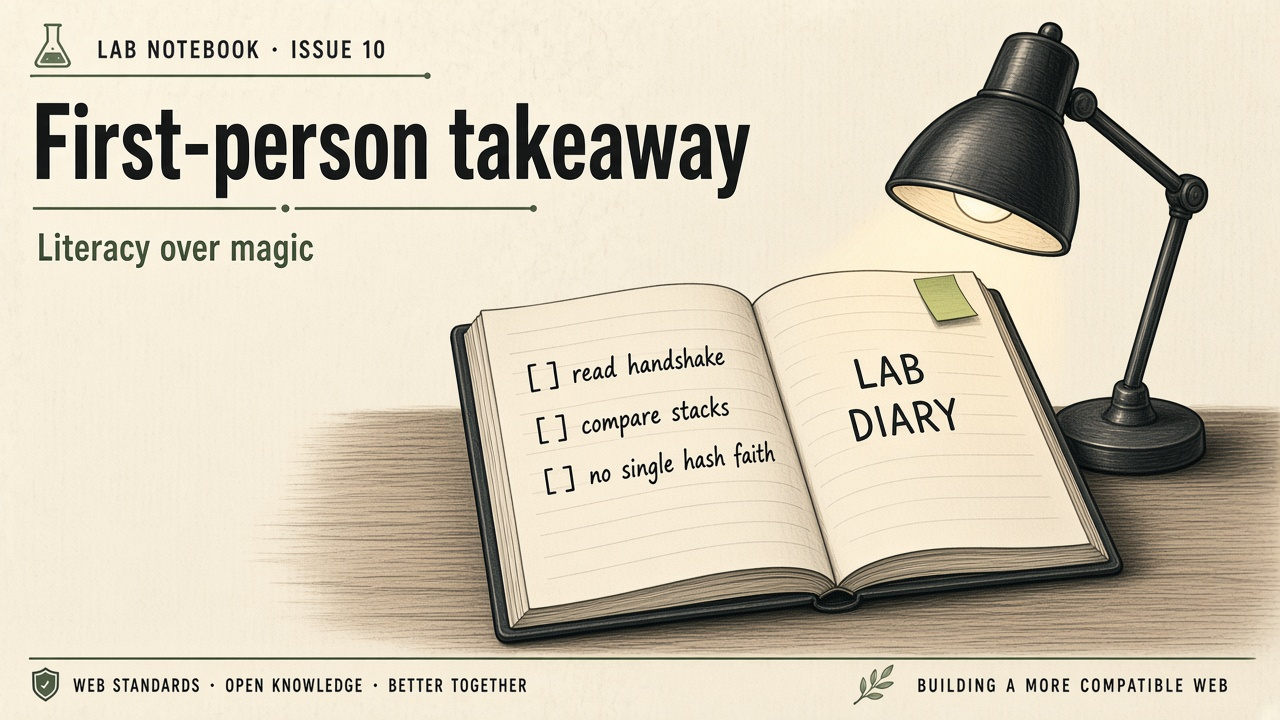
A TLS fingerprint is part of modern web literacy. I study it as a layer, not as a magic seal of invisibility or a curse.