Why this topic matters to me now
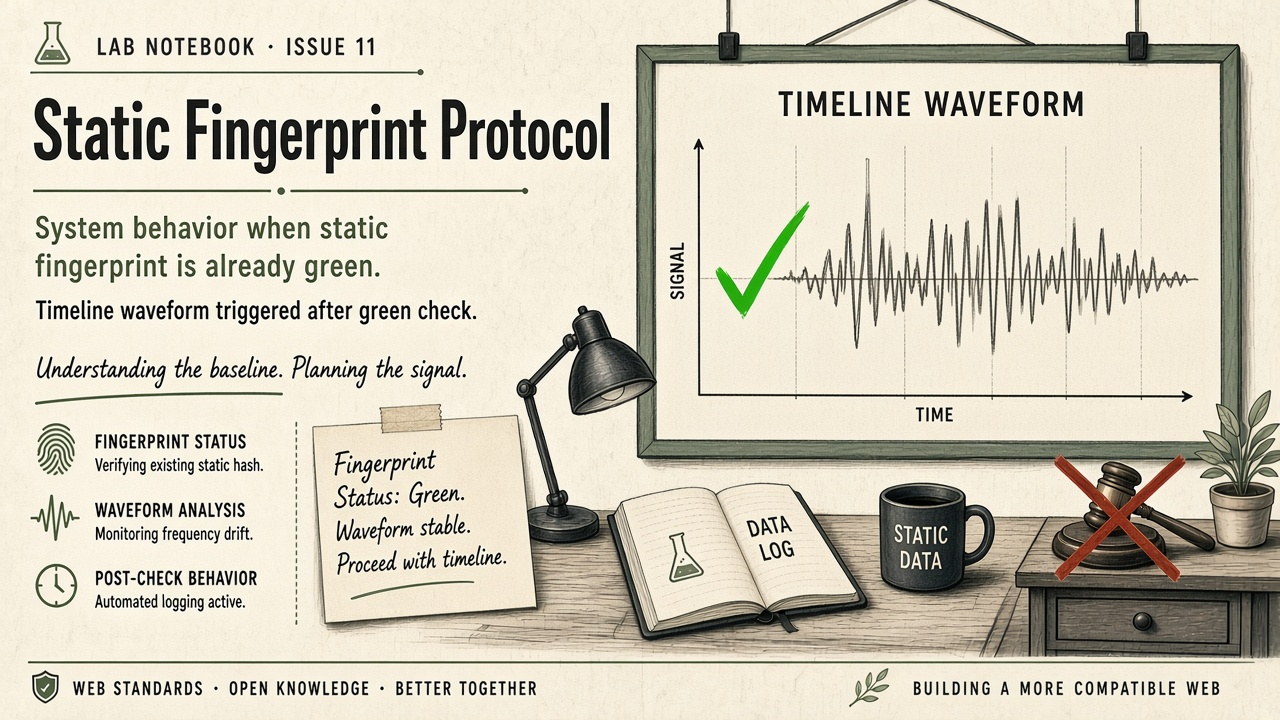
Sometimes the static surface is already “green”: claims and APIs do not argue. And yet the scene still looks dead. That is when the behavior-over-time layer begins — the slipperiest one to publish, because it is easy to slide into biometric thresholds and gesture recipes.
After parity on “what the browser looks like,” the question left is “how it is used.” I write about sensors, gesture, and time in broad strokes — without numbers that would turn a diary into a how-to.
Public frame (links)
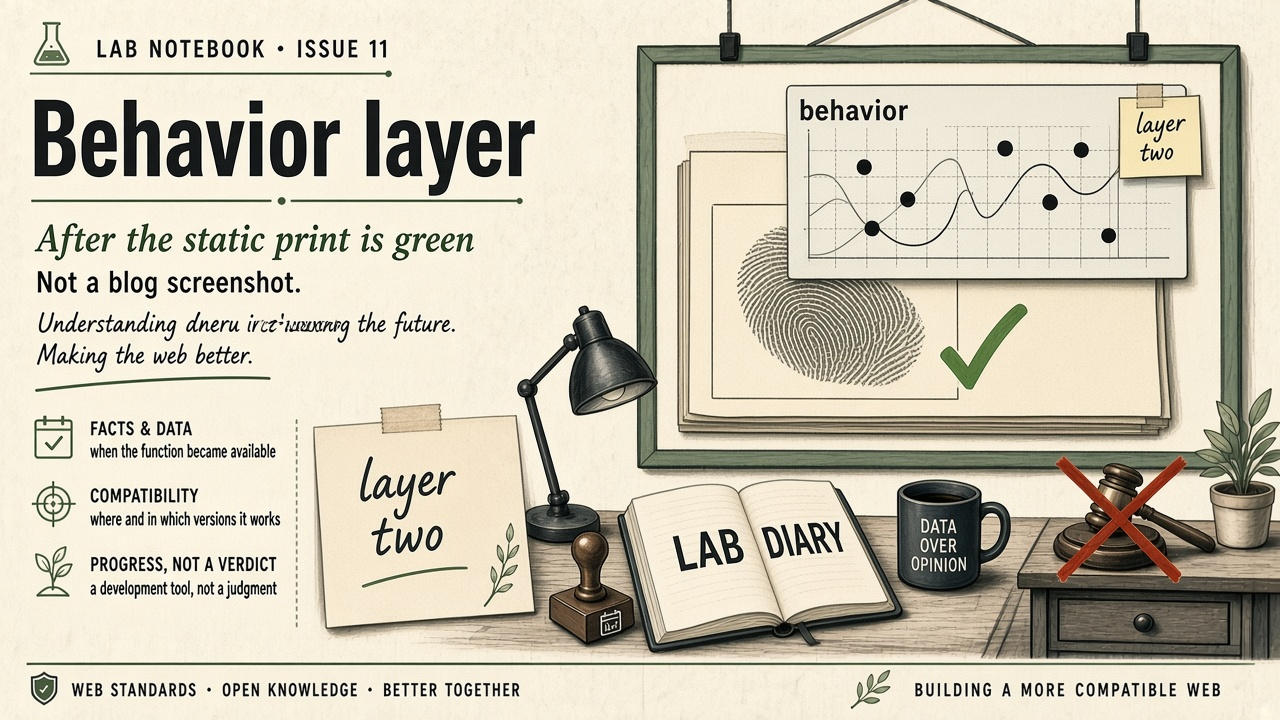
Public expectations for the mobile surface show up at least through DeviceMotion / DeviceOrientation on MDN. That is not a license for “human/bot” thresholds — it is a reminder: a phone has bodily signal texture; pure automation often lacks it, or makes it too perfect.
What I observe in the lab, in plain words
After a green static look
Claim–API consistency is a necessary floor. Behavior is the next question: does the scene live in time like everyday life, or like an ideal straight line.
A public surface checker can be green. That is a smoke test, not a diploma.
Why an “ideal straight line” looks suspicious in real life
Life jitters. Not always hard, not always the same way, but it rarely looks like a blueprint. I speak in metaphor. Metaphor exists so I do not publish thresholds.
Publication boundary
No biometric thresholds, no “working click” timings, no gesture guides aimed at a specific antifraud stack. Only the layer as an idea and as a question about whether the scene is alive.
What this changes in detect and/or in the build (without specifics)
Detection does not end at a green surface checker. A build is not “done” if the scene is statically pretty but dead in time — and publicly I do not explain how to “animate” it for bypass.
In the two-mirrors ritual, behavior is an evening question, not morning hype.
What I will not say, and why
No thresholds, sensor signatures, or step-by-step imitation. That is the charter’s red line.
Short first-person takeaway
Behavior is the layer after statics. It matters, and it is dangerous to publish. In the diary I leave it as a question about aliveness of the scene — not as an instruction.