Why this topic matters to me now
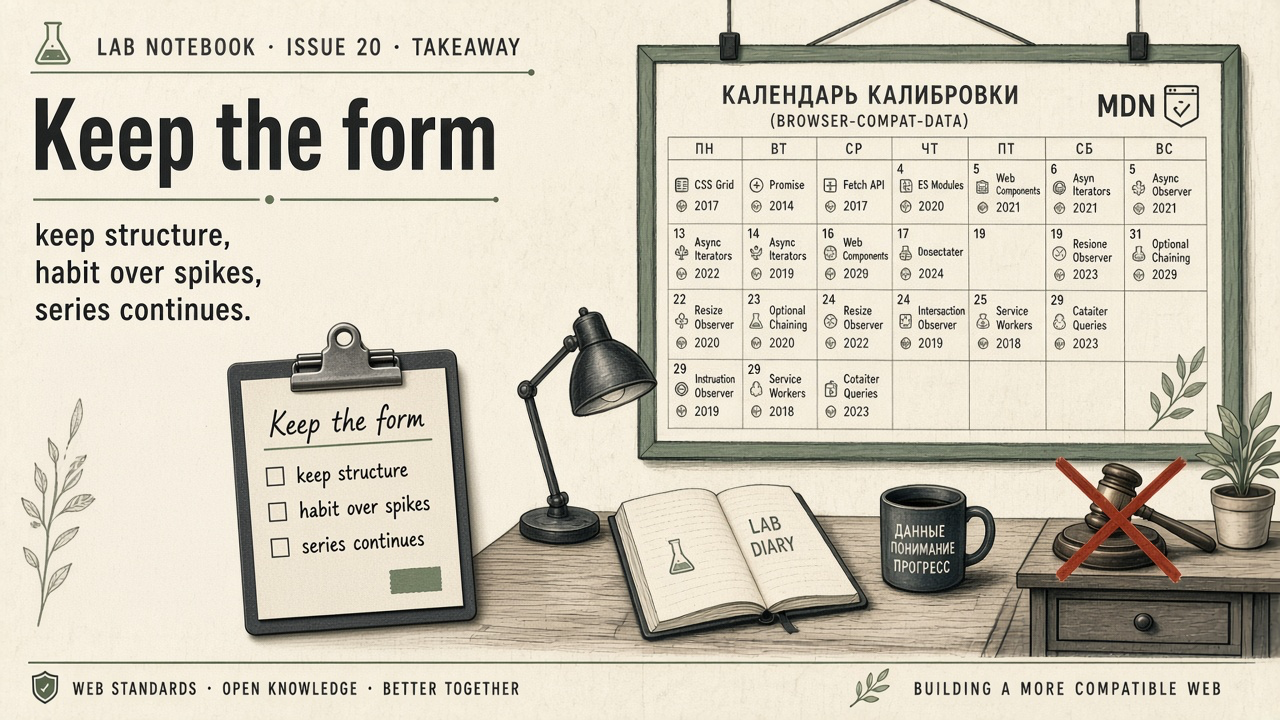
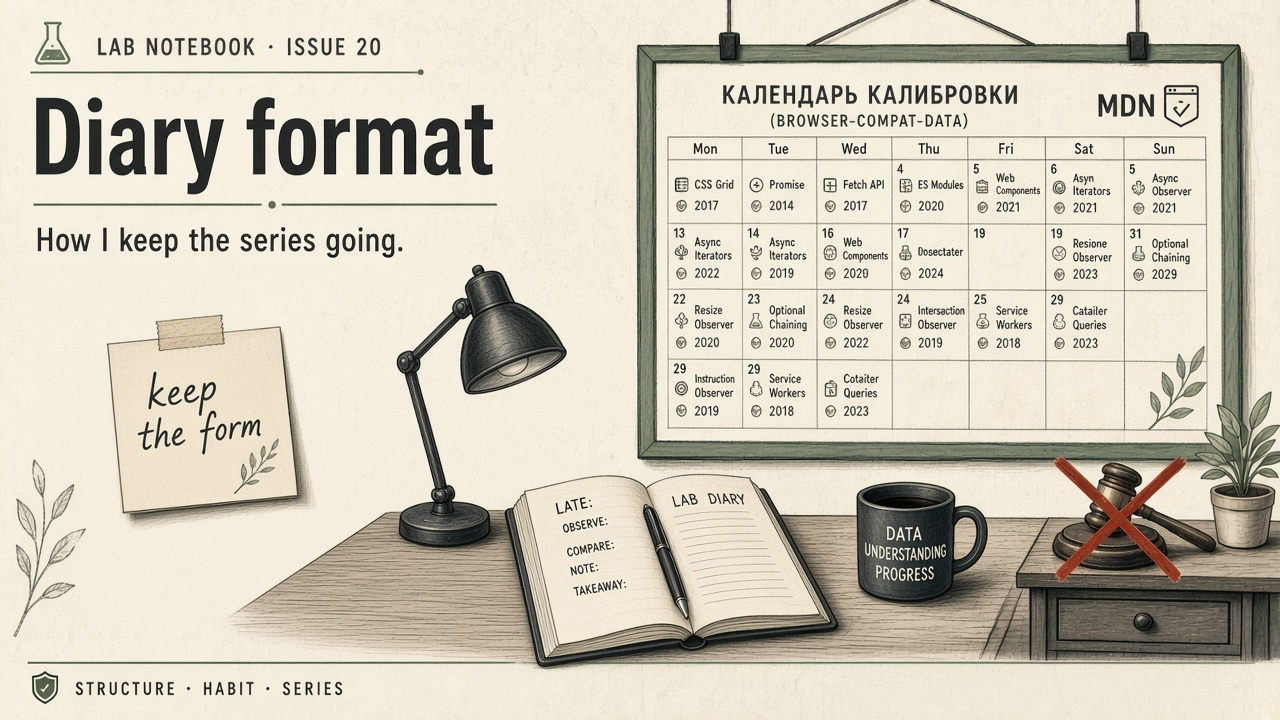
The twentieth note is about form. The series is a repeatable ritual: hypothesis → public source → lab experiment → conclusion without secrets. If the form holds, the series can continue without sliding into product warfare and without leaking secrets.
Public frame (links)
The template rests on the series’ public source bank: BCD, Chrome release notes, UA-CH, WebRTC/MDN, JA3, x-bot/kto-ty, detect.expert, Chromium src. Every new note should be able to point a finger at least at one open source.
What I observe in the lab, in plain words
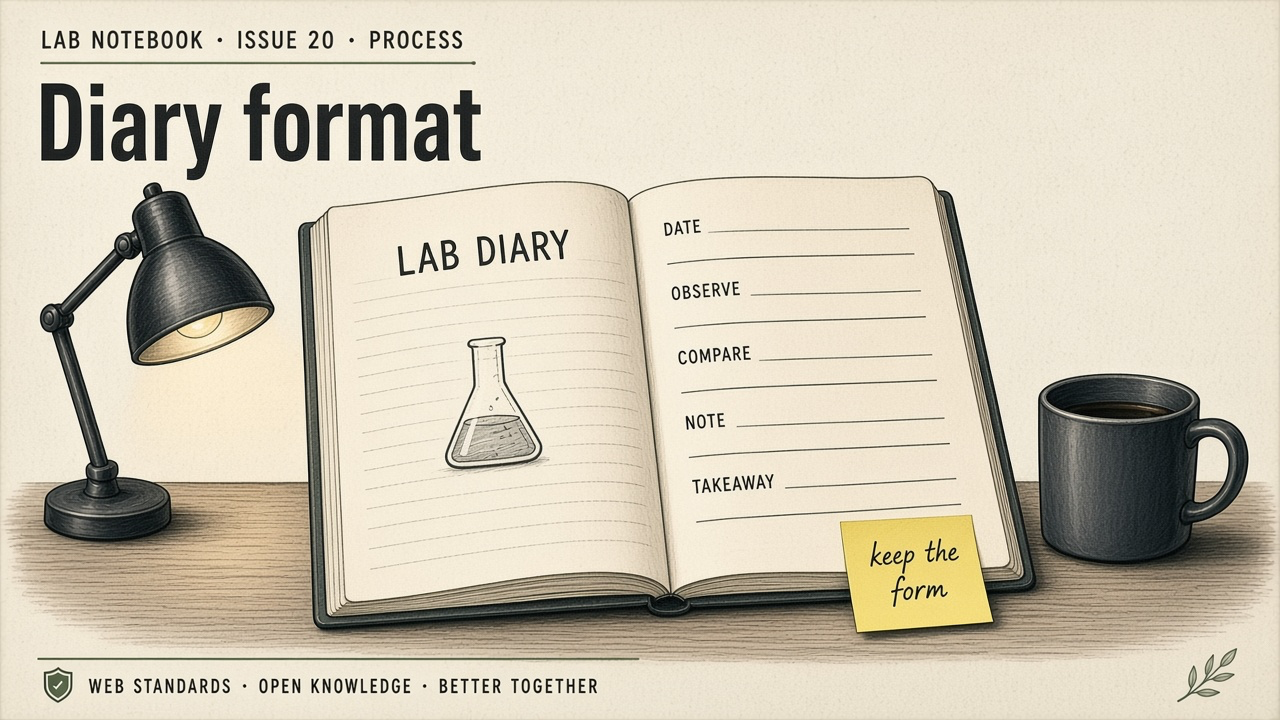
Note template
- Why this topic matters to me now
- Public frame (links)
- What I observe in plain words
- What changes in detect and/or the build (without specifics)
- What I will not say, and why
- Short first-person takeaway
The CTA is always one: check consistency on yourself / on a reference — not “try to bypass.”
How to cite the source bank
A link is a commitment to speak the language of the literature. If I cannot cite publicly, I am probably already on the red line.
Queue after the first twenty
WebGPU as a capability layer; storage/cookie jar as visit history without cookie names; HTTP/2 and QUIC literacy; alternative engines on iOS after the EU; ethical curation of a device-reference corpus.
What this changes in detect and/or in the build (without specifics)
A rhythm appears: hypothesis → open source → reference → research loop → conclusion → prohibition. Rhythm beats hype. The two mirrors remain a method, not a show.
What I will not say, and why
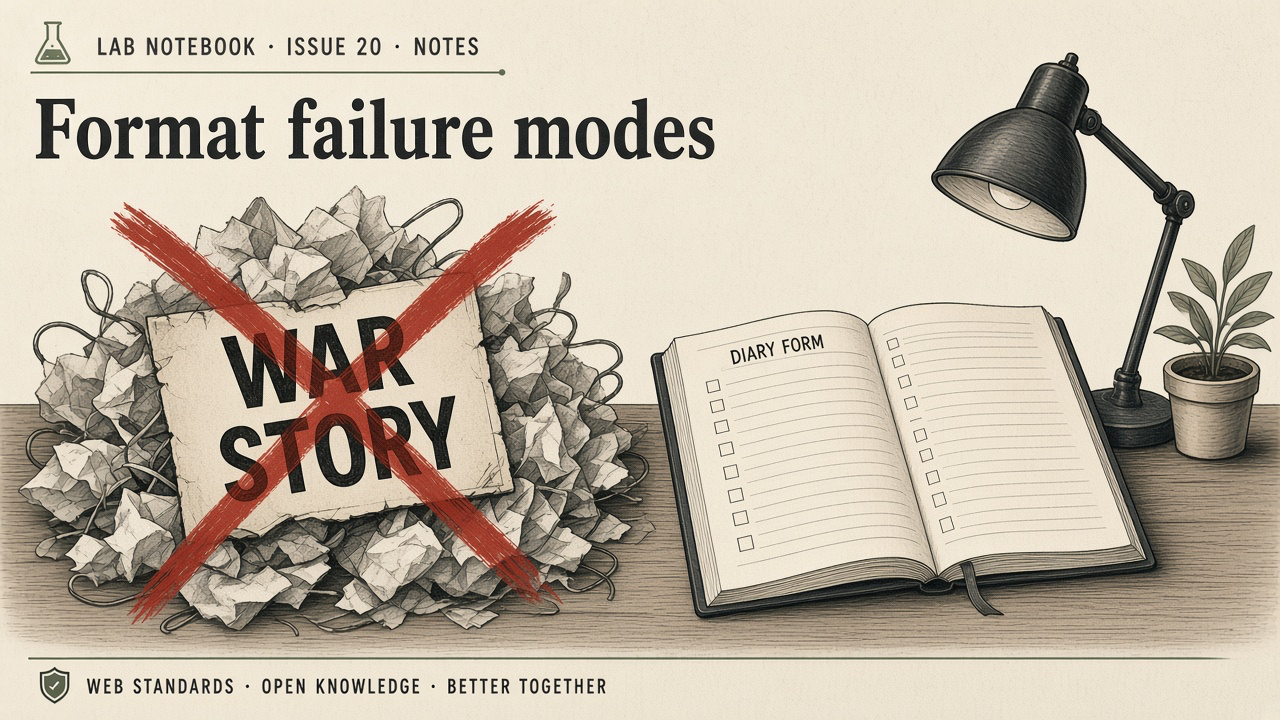
Format does not cancel the red lines. It locks them in.
Short first-person takeaway
I keep the dual-lab diary on the same skeleton: first person, with public links, without bypass recipes. The next twenty topics are already in the queue — same genre.