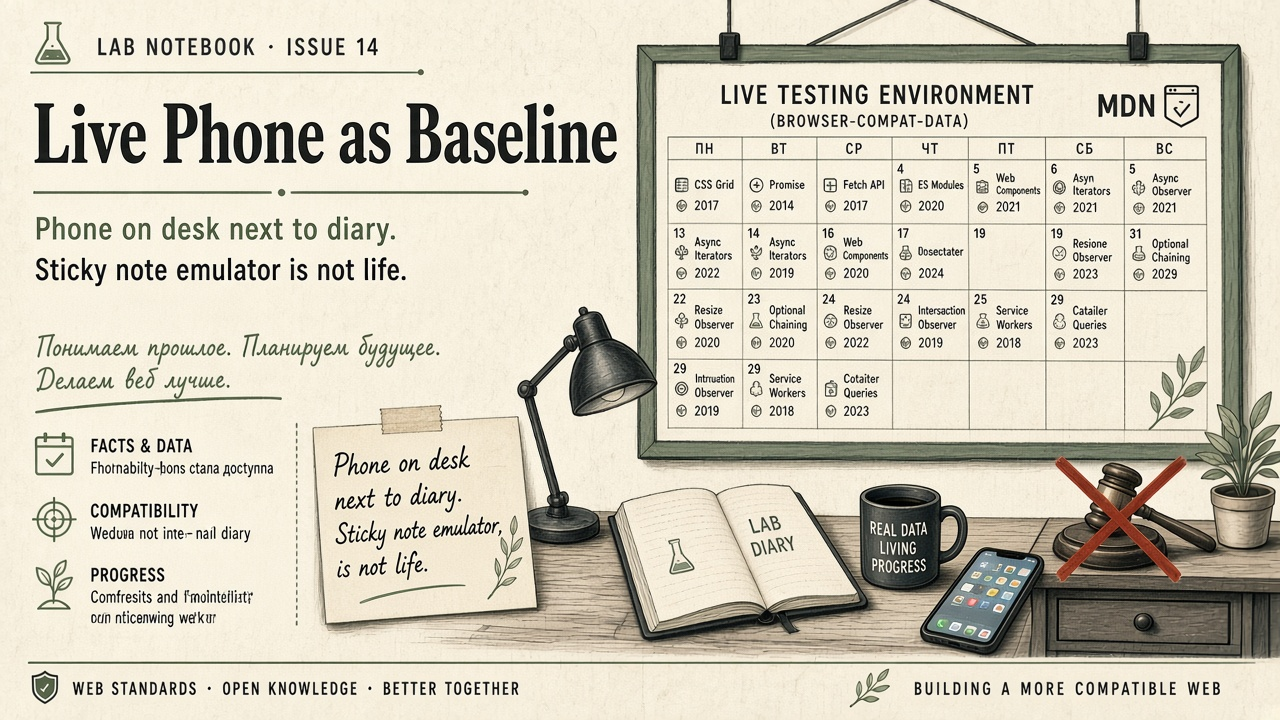
Why this topic matters to me now
Without a live phone, the lab quickly starts comparing fantasy to fantasy. An emulator is useful. It is not a baseline of everyday life. I need a baseline that can get tired, lose network, and ask for sensor permission.
Without a live phone I argue with fantasy. A device baseline sobers both detect and the build.
Public frame (links)
Expectations of a mobile surface can be read at least through public APIs like DeviceMotion and through the honesty of open checkers like x-bot: they classify the surface, they do not issue a device passport. My reference is living everyday life, not an “ideal phone JSON”.
What I observe in the lab, in plain words
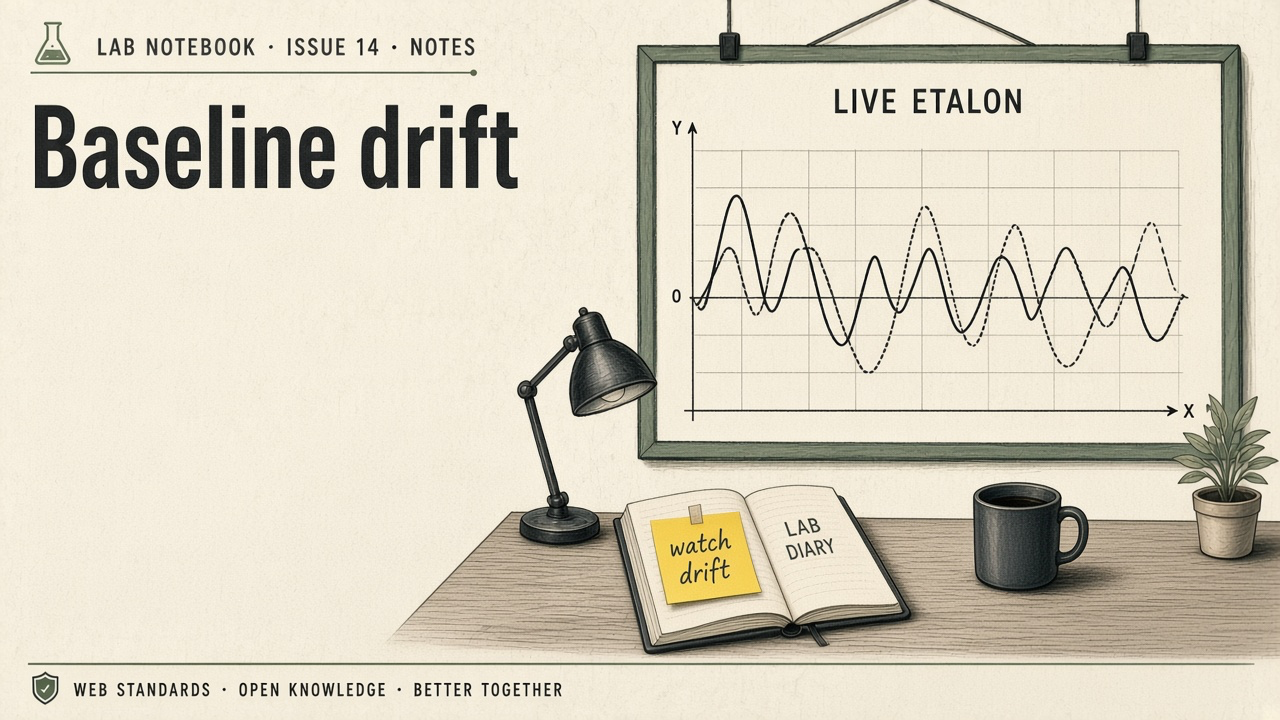
What I compare at the level of ideas
Surface, behavior over time, network as context. Not internal signal names — classes of questions. Next to a phone you immediately see where the lab drew an ideal straight line.
Why an emulator is not a substitute
Because it is too controllable and too clean. It is good for reproducibility and bad as the only norm of “how people live”. Reproducibility is needed. A norm of everyday life is needed separately.
How to describe discrepancies
“On the reference the sensor permission is different”, “the scene is livelier”, “the network is more everyday”. Without a catalog of internal flags and without device serial numbers.
What this changes in detect and/or in the build (without specifics)
Detect is calibrated on the noise of life. The build is checked not only against a public checker, but also against the question: is it embarrassing next to a real phone.
What I will not say and why
No dumps of the reference as a fitting guide, and no device serials/fingerprints.
Short first-person takeaway
A live phone sobers you up. It returns the lab from the theater of ideal fields to a room where there is bad LTE and a random gesture.