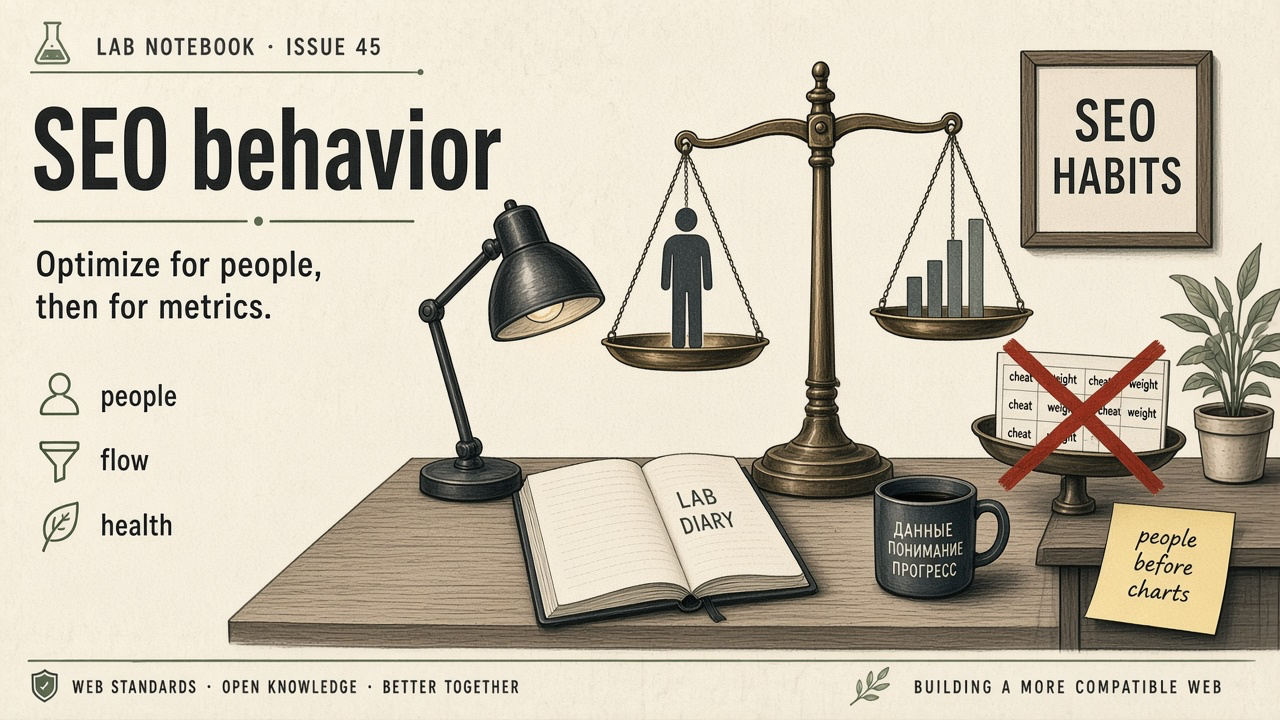
In modern search promotion it is no longer enough to simply place keywords. Search algorithms, especially Yandex, increasingly analyze how users interact with a site. That is where behavioral factors come to the foreground. Understanding what behavioral factors in seo are helps content creators and webmasters make more balanced decisions when designing interfaces and page structure.
Many confuse these metrics with technical or content parameters. Yet behavioral factors in Yandex reflect the real visitor experience: how long they stay on the page, how quickly they go back, whether they click other links. These signals shape the overall site rating in the SERP.
Core behavioral factor metrics
The key indicators are:
- Time on page — shows how well content holds attention.
- Scroll depth — how far the user scrolled the page.
- Clicks on other links — signals useful navigation.
- Bounces — the share of users who left without interaction.
This data helps understand which parts of the site work well and which need work. Remember that behavioral factors on Avito cannot be bought directly. Paid services may imitate activity, but algorithms increasingly catch anomalies. So it is better to focus on natural UX improvement.
Impact on SEO positions
Search engines interpret behavioral data as a quality signal. If users leave quickly, the algorithm may conclude that content does not match the query. Conversely, long stays and active navigation point to relevance. That is especially visible in competitive niches where even small UX differences can affect rankings.
How to optimize without manipulation
Instead of trying to inflate behavioral factors on Yandex Maps or other services, focus on these aspects:
- Improving text readability and structure.
- Adding visuals and infographics.
- Optimizing page load speed.
- Clear navigation and calls to action.
That approach not only raises metrics but also improves conversion. Users get what they look for and are more likely to complete the target action.
Mistakes to avoid
A common mistake is ignoring mobile devices. Since a large share of traffic comes from smartphones, slow loading or an awkward interface hurts behavioral metrics. Also avoid overloading pages with ads that interfere with content perception.
Another widespread myth is believing that “behavioral factors of health risk” or other non-SEO terms relate to search promotion. These are different domains, and mixing concepts can lead to wrong conclusions. In SEO you should start from analytics data and real user experience.
Analysis tools
For monitoring behavioral metrics, use:
- Yandex.Metrica — the main data source for the Russian-speaking market.
- Google Analytics — an alternative with global statistics.
- Heatmap services — visualization of clicks and scrolling.
Regular analysis of these indicators helps find weak spots and make timely changes. That is especially important when launching new sections or updating design.
Conclusion
Behavioral factors remain an important part of SEO strategy. They reflect real audience preferences and help search engines assess site quality. Instead of trying to manipulate metrics, focus on creating useful, convenient content. That approach not only improves rankings but also builds user trust, which over time grows traffic and conversion.

Remember that SEO is not a one-off campaign but a continuous improvement process. Track behavioral factors in seo, adapt the site to audience queries, and be ready to change as technology and user expectations evolve.