In an era when users increasingly turn to international search engines, knowing how SEO in Google works is critical for any business. Unlike local search engines, Google sets stricter bars for content quality, load speed, and technical health. This article covers key aspects of optimizing for the American giant’s algorithms.
Google algorithm specifics
Google uses a complex ranking system based on hundreds of factors. The main ones include:
- Content quality and relevance: texts must answer user queries, be unique and informative.
- Technical optimization: load speed, mobile responsiveness, structured data.
- Domain authority: quantity and quality of external links (backlinks).
- User experience (UX): easy navigation, low bounce rate, time on page.
Google constantly updates its algorithms. Updates such as Core Update or Helpful Content Update can reshape site rankings. So SEO is not a one-off action but continuous monitoring and adaptation.
Technical optimization
The technical side of SEO is the foundation without which even ideal content cannot show in the top. Key elements include:
Load speed
Google aims to show users the fastest pages. Use PageSpeed Insights to analyze speed and remove bottlenecks. Optimize images, minify CSS and JS, use caching.
Responsiveness (Mobile-First Indexing)
Most users open search on mobile. Google prioritizes responsive sites that display correctly on any screen size. Make sure your site has a responsive design.
Schema.org structured data
Adding structured data helps search engines understand page content and show rich snippets (stars, prices, dates), which raises CTR.
Content strategy
Content is the heart of SEO. For successful Google promotion you need to:
- Run deep keyword research, including long tails.
- Create content that solves user problems, not just contains key phrases.
- Structure texts with H1–H6 headings, lists, and subheads.
- Regularly update old content with fresh information.
Quality always beats quantity. Better to have 10 deep expert articles than 100 shallow notes.

External links and authority
Backlinks remain a major ranking factor. Google got smarter and now weighs not only link count but quality. Links from authoritative, thematically relevant sites carry more weight.
Avoid spammy link strategies. One link from a major industry portal beats a hundred from low-quality directories. Grow your brand and create content others want to cite.
Monitoring and analytics
Without analytics, SEO becomes a blind experiment. Use Google Search Console and Google Analytics to track:
- Positions for key queries.
- Organic traffic.
- Indexing errors.
- User behavior on the site.
Regular data analysis surfaces weak spots and lets you adjust strategy.
Common mistakes in Google promotion
Even experienced specialists make mistakes. The most common:
- Ignoring mobile users.
- Keyword stuffing in texts.
- Incorrect robots.txt and sitemap.xml setup.
- Missing structured data.
- Buying low-quality links.
Avoid these mistakes and you raise your odds of success significantly.
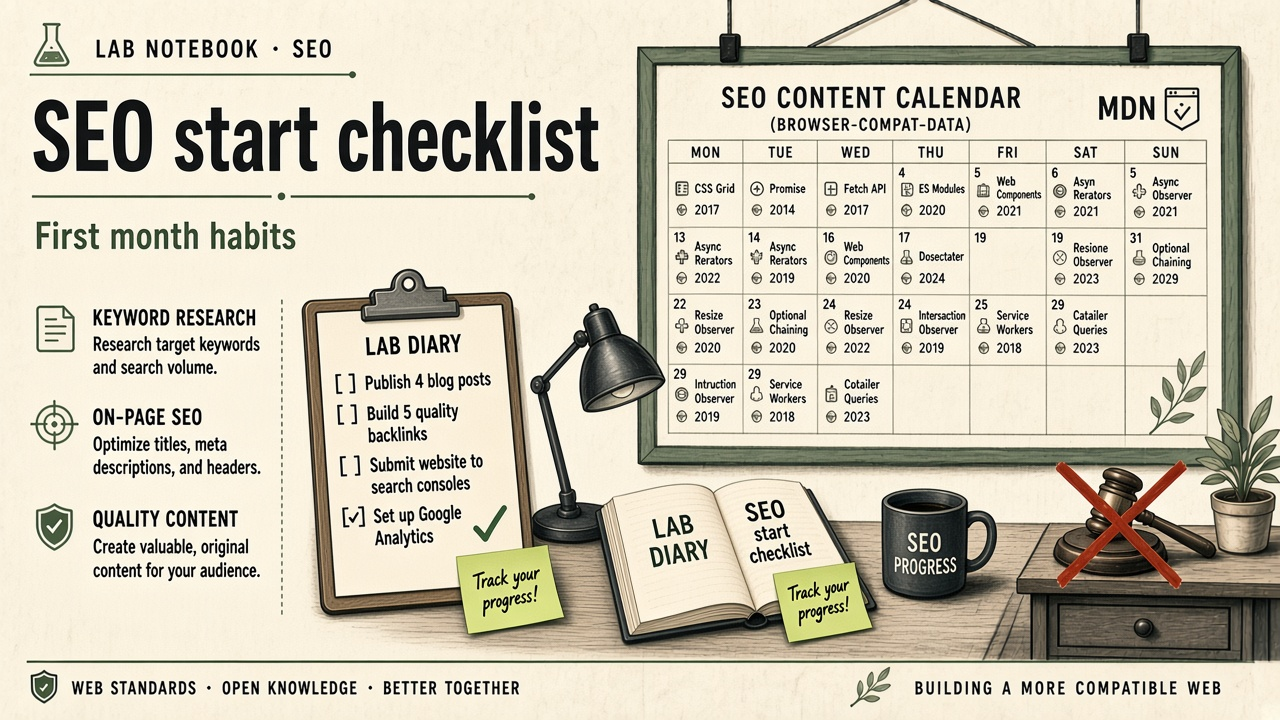
Checklist to start SEO
To begin promoting your site in Google, take these steps:
- Run a technical site audit.
- Define the target audience and key queries.
- Create a content plan for 3–6 months.
- Set up analytics (Search Console, Analytics).
- Start technical improvements and content work.
- Monitor results and adjust strategy.
SEO in Google needs patience and a systematic approach. Results do not arrive in a week, but with the right actions you get a durable organic traffic stream.