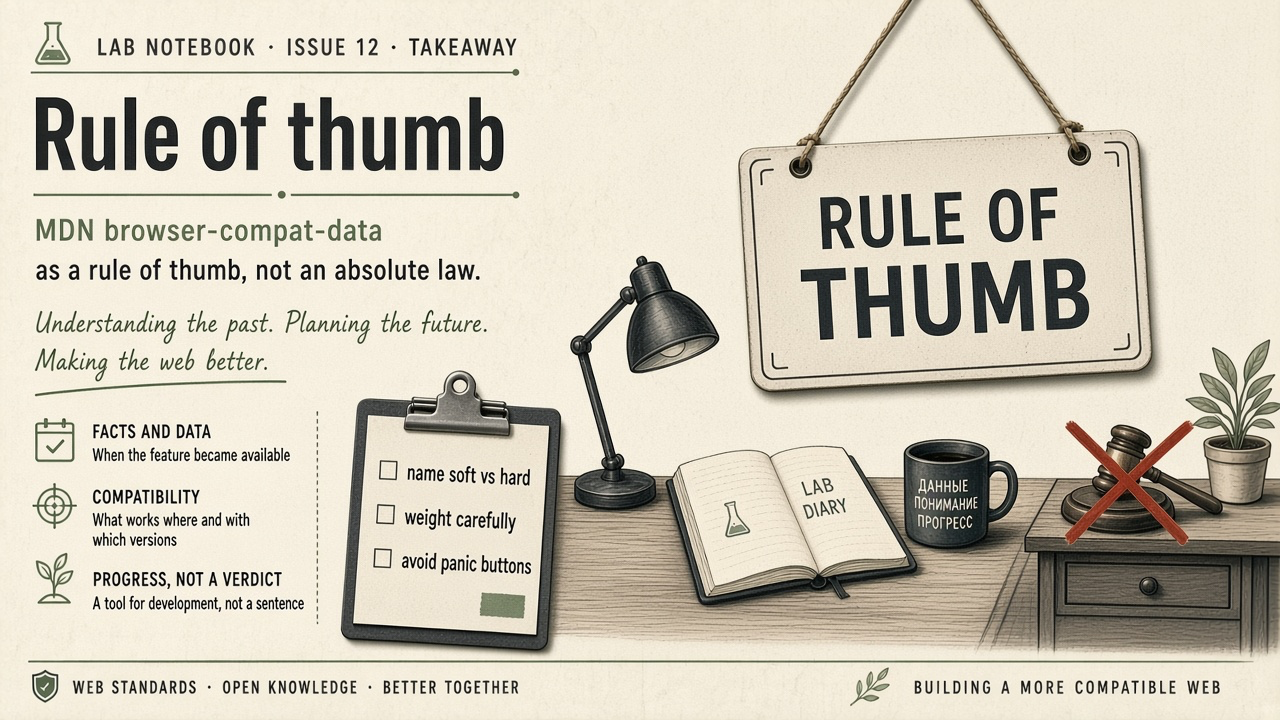
Why this topic matters to me now
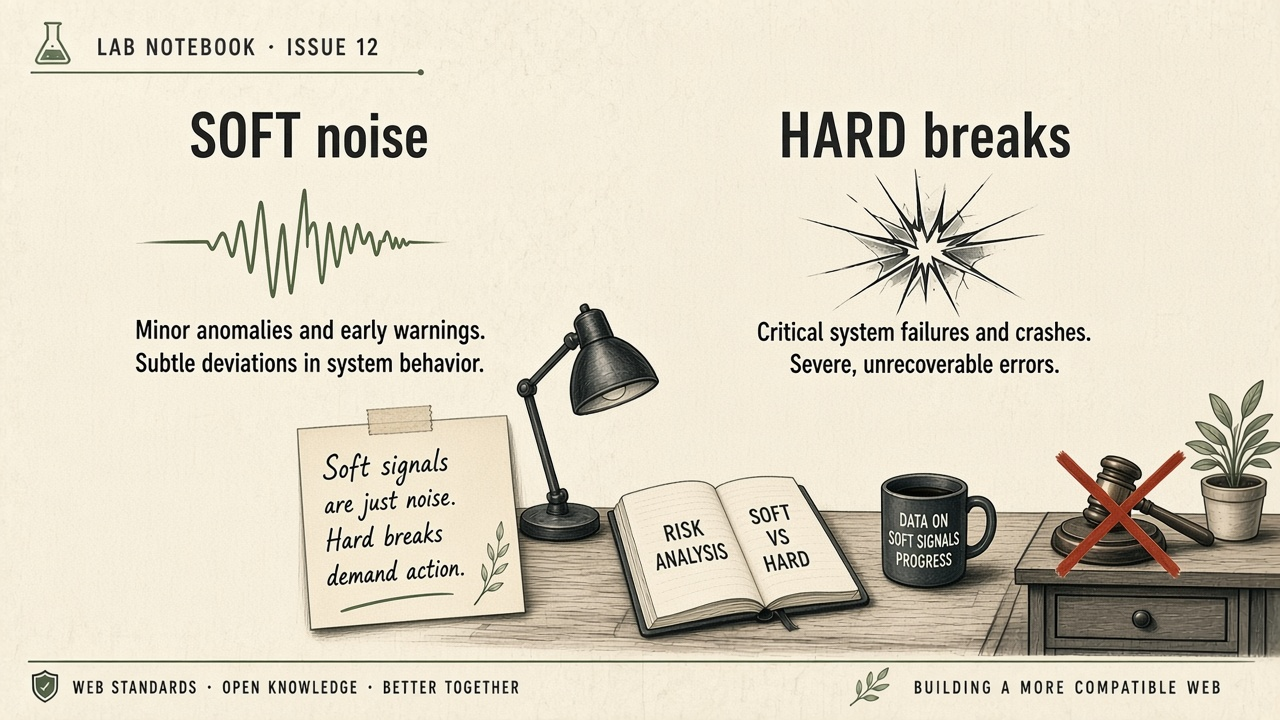
I need an ethics of interpretation. Not all oddities are equal. There is soft noise of everyday life and hard breaks in integrity. A stack of soft oddities should not automatically become a verdict. Hard things are about integrity and clear environment deception.
If you confuse them, the lab turns into a punitive machine against VPN and Incognito.
Public frame (links)

The public philosophy of consistency and critique of a single hash (in the spirit of open texts from detect.expert) fits well with Chrome privacy literature: reduced UA / privacy. Privacy is everyday life, not automation.
What I observe in the lab, in plain words
Metaphor
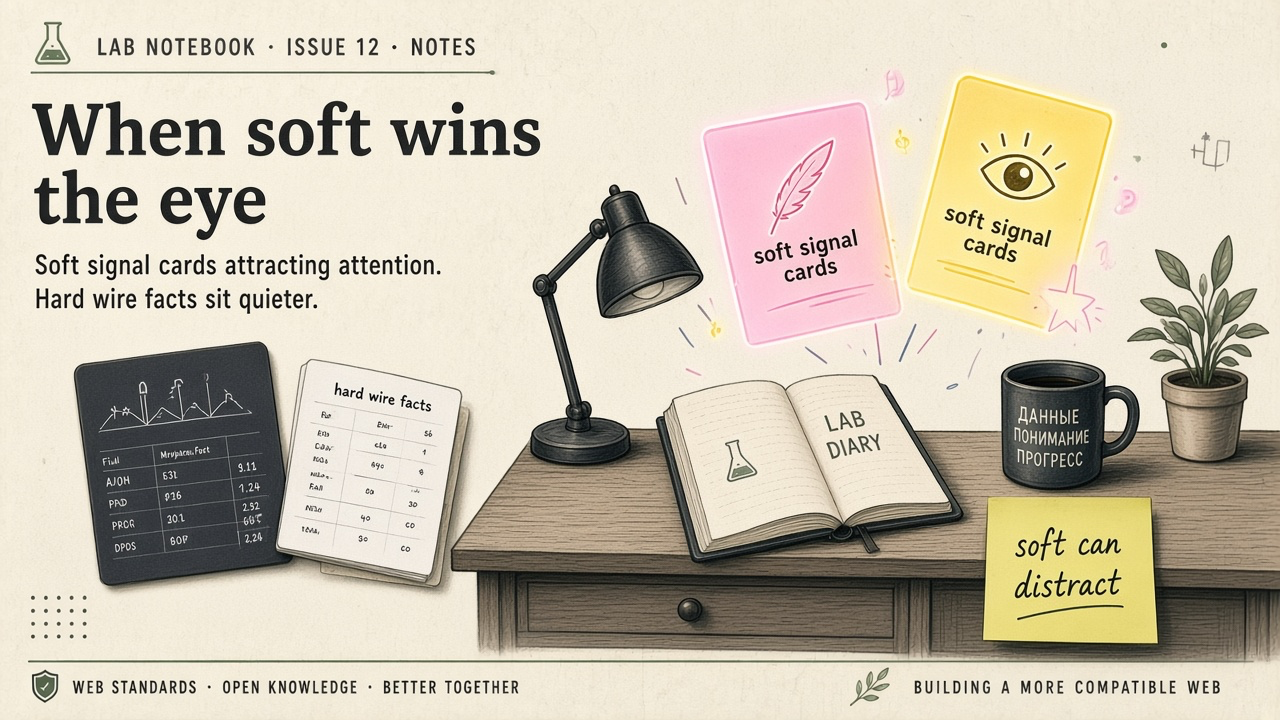
A soft signal is street noise outside the window. A hard one is a broken seal on the door. Both are noticeable. Reacting the same way is foolish.
Soft: reduced hints, odd egress, rare locale, private mode. Hard: systematic conflict between claim and measurement, different truths in different rooms, clearly broken environment integrity.
Privacy/VPN ≠ automation
Incognito, reduced hints, odd egress often belong to living people. Hard contradictions across layers and rooms are another class of stories. Piling soft signals until they feel “almost hard” is lazy math.
Tone of conclusions
I prefer writing “elevated uncertainty” instead of “caught.” Uncertainty is an honest lab product. A personhood label needs more work and more humility.
What this changes in detect and/or build (no specifics)
Fewer nuclear weights on everyday life. More attention to profile integrity. In the build — less celebrating noise camouflage and more work on the absence of hard contradictions — without public recipes.
What I will not say, and why
No weight tables and no “how to stack soft noise correctly.”
Short first-person takeaway
Risk, for me, is a spectrum. I distinguish soft and hard on purpose so I am not at war with users who simply live in modern privacy.