Why this topic matters to me now
For a long time I tried to pick a side. Sometimes “only catch” felt right, sometimes — “only understand how a bypass is built.” Alone, both paths started lying fast — beautifully, convincingly, and wrongly.
If I write only a detector, I grow theories. “This is definitely automation.” “This is definitely a living person.” Theories love silence. While there is no controlled browser contour opposite, where a hypothesis can be deliberately broken, it lives too long and grows exceptions. I start calling exceptions “special cases,” then “noise,” then I simply stop seeing them.
If I write only a research Chromium, I start optimizing “so it looks similar.” But similar to what? Without a detect mirror it is easy to tune appearance to a lab fantasy, not to real layer consistency: browser claims, Web API surface, behavior over time, network as context. You get a pretty stand that convinces the author and lies to the experiment.
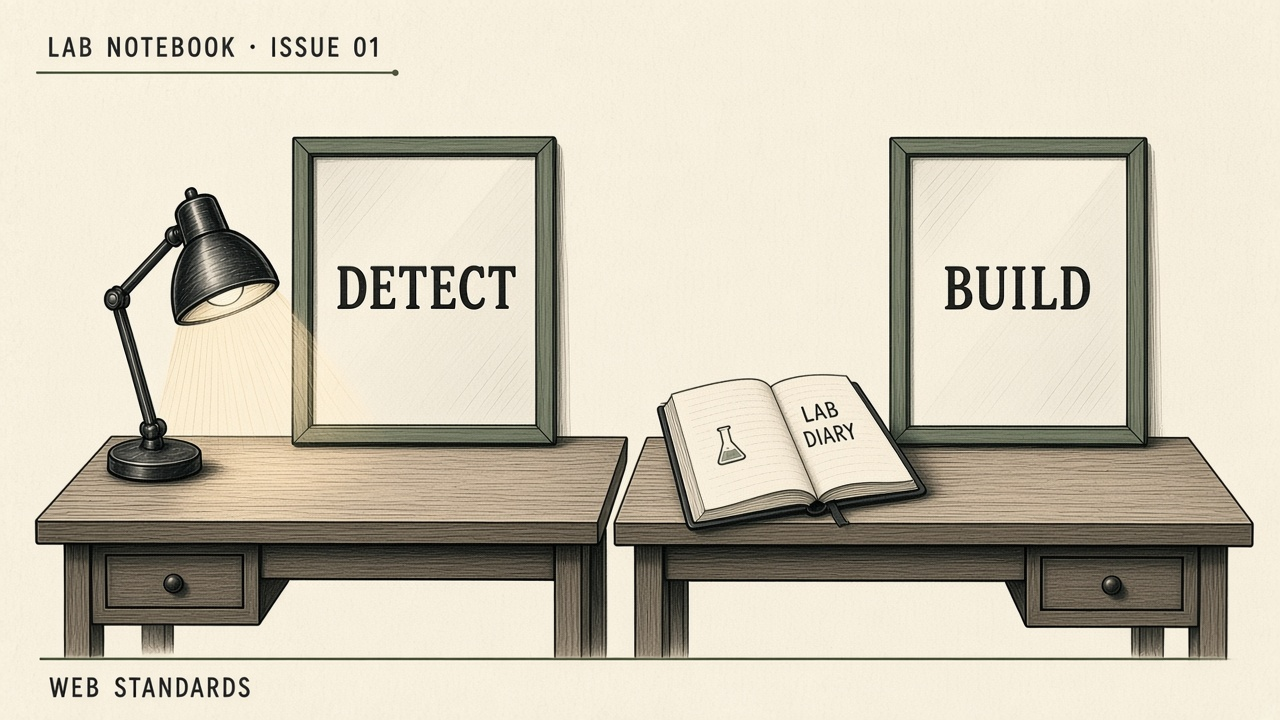
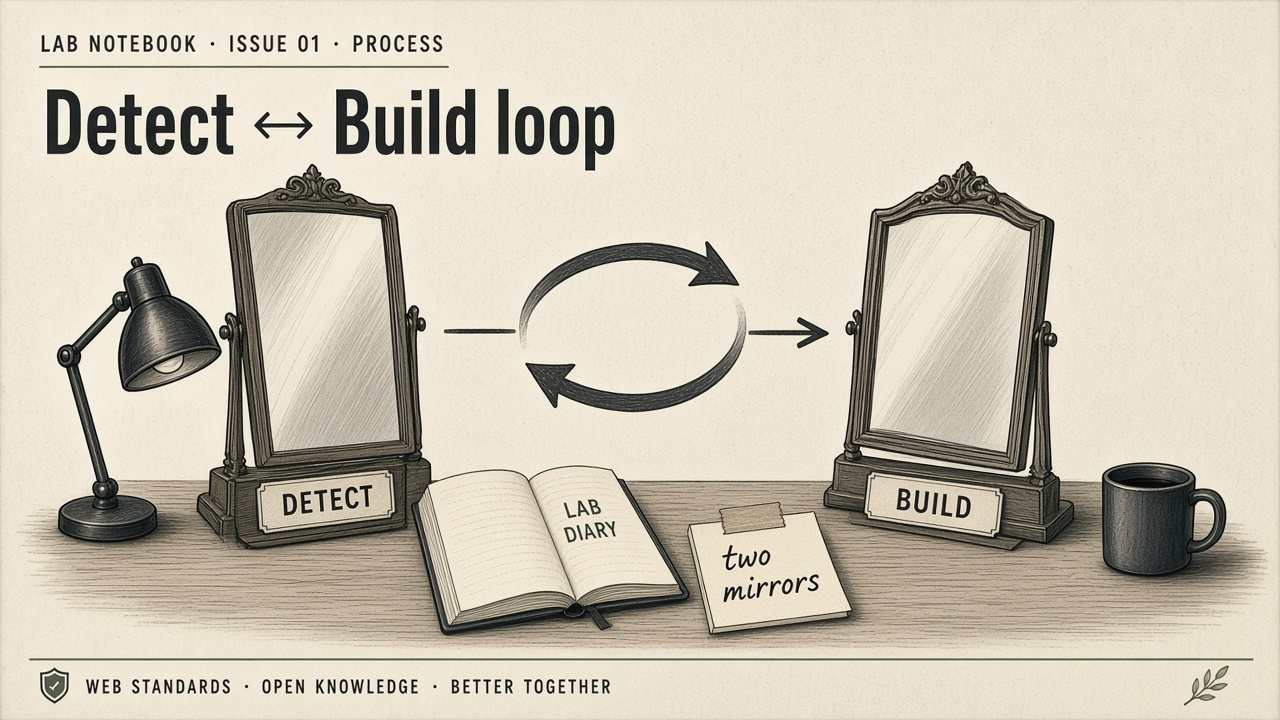
So I keep two mirrors in one room. One hand builds a contour that looks for contradictions. The other — a browser on which those checks can honestly fail and show where I fooled myself. This is not a split personality and not “playing both teams for hype.” It is a way to falsify my own ideas before they become dogma.
Short: I need a laboratory, not a podium.
How I arrived at the “detect ↔ build” format
At first I had only one pole — “catch the oddity.” The web has plenty of oddities: User-Agent claims, Client Hints, graphics, workers, sensors, network. Each oddity provokes a rule. A rule provokes a false positive. A false positive provokes another rule. A month later I no longer remembered which hypothesis I was even testing.
Then the second pole appeared — “build my own Chromium and see what changes.” That intoxicating differently: control of variables, source tags, the feeling that the world is finally measurable. But without the counter-question “what exactly am I trying to make consistent?” the build becomes a collection of patches “just in case.”
The junction of the two poles happened in a simple thought. If I cannot reproduce a class of contradiction on a controlled browser, I poorly understand the contradiction. If I cannot state the contradiction in detect words (without magic labels), I poorly understand what I am changing in the browser.
That is how the two-mirror ritual was born: hypothesis → open source/frame → run on a baseline (live phone / ordinary Chrome) → run on the research contour → conclusion “what agreed / what did not” → what I will not publish.
Public frame
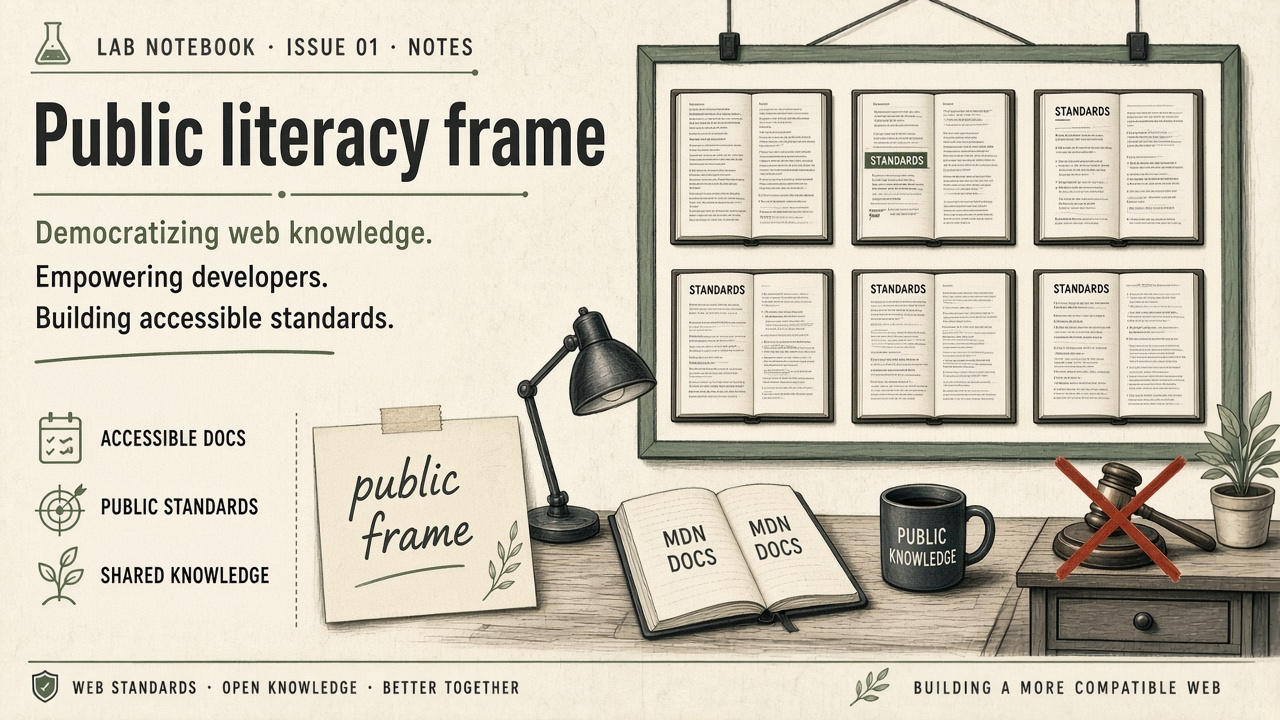
I try to lean on public literacy, not on a “secret sauce.”
In detect.expert materials I feel close to the shift: from simple declarative reading of “what is in navigator” toward a more honest check of consistency between the claimed profile and what is actually measured. There is also a critique of the cult of one big field hash — a good counterweight to slides about a “unique fingerprint forever.” I do not need to agree with all of their accuracy numbers; I need engineering of thinking.
Chromium sources, for me, are a measuring instrument. I can pin a version, understand where the Web API surface comes from, and separate “this is how the engine is built” from “this is the antidetect I imagined.” That is literature and lab at once: open code, open Chrome release notes, open fights in the issue tracker.
Separately I keep a simple truth from public consistency tools like x-bot.tech: client JavaScript classifies a surface, it does not deliver a forensic “human / bot” ruling and does not prove a physical OS. If a tool is honest with the reader, it says so. I want the same honesty in my diary.
Docs on User-Agent Client Hints drive another nail: even “official” browser hints can be cut by privacy policy. A claim is a hypothesis. You check a hypothesis with other layers; you do not worship it.
What I observe in the lab, in plain words
The picture repeats often enough to become a method.
When only the detector works
I catch myself wanting to “add one more check.” Without a build mirror the check grows false positives on living everyday life: a person in private mode, a person on VPN, a weird GPU driver, a reduced User-Agent, a rare locale, an old phone, a corporate proxy. The detector starts confusing life noise with automation — and I get a “win” I am ashamed of.
Typical inner monologue: “well that is weird.” Weird — yes. Automation — does not follow automatically. Between those words there should be a gulf filled with context.
When only the build works
I catch myself wanting to “pull one more layer so it looks more native.” Without a detect mirror it is easy to fix a symptom in one place and miss that another browser “room” already speaks differently: another execution context, another network layer, different behavior over time. You get a decoration of consistency — a storefront for the author.
Typical inner monologue: “it got greener on a public checker.” A good smoke test. A bad diploma.
When the mirrors look at each other
Together the contours work as mutual falsifiers. A hypothesis either holds under hits from both sides, or dies. I need fast deaths of hypotheses. A long-lived pretty mistake costs more than short shame.
Another repeating lesson: success on a public “bot checker” and success in a thinking lab are different kinds of success. A checker teaches the alphabet of the surface. A lab teaches not to lie to yourself about the meaning of the letters.
One day of the ritual (no secrets)
How this looks practically, without internal signal names.
In the morning I take one hypothesis in human language. For example: “if the browser claims one version and the API surface looks like another era — that is a contradiction between claim and measurement.” The hypothesis is intentionally general. It can be discussed via release notes and open consistency pages.
In the daytime I look at a baseline: an ordinary browser on a live device. Not to “capture a fingerprint forever,” but to understand everyday noise: what jumps by itself, what is stable, what depends on permissions and network.
In the evening I look at the research Chromium contour with one controlled variable — not a hundred at once. If I change everything, I will not learn what broke consistency.
At the exit I do not have a “list of wins.” I have a journal: hypothesis; what confirmed; what died; what turned out to be everyday noise; what I will not drag into a public text.
What this changes in detect and in build
In detect I learn to phrase the conclusion as a layer contradiction, not as a personhood label. The phrase “claim does not match measurement” is more honest than “you are a bot.” A label needs context, history, behavior, sometimes — an admission of uncertainty. A contradiction can be shown and discussed. A label often serves laziness.
Practically this also changes the rhythm. I add “just in case” checks less often and ask more often: which hypothesis does this kill? If the answer is “none, it just feels alarming” — the check is already suspicious on entry.
In the build I learn to set the experiment goal differently. Not “pass unknown antifraud of brand X.” But “check whether claim–surface consistency holds under a controlled change of a variable.” That is a different ethics and a different “done” criterion.
I celebrate “it got greener on a checker” less often and ask more often: what exactly agreed — and what could remain contradictory off-camera, in another browser room or on another layer (behavior, network)?
Mistakes I have already made (and will make)
I confused rarity with hostility. A rare GPU stack or a weird timezone by themselves do not prove automation.
I confused stability with truth. A stable field set can be stably inconsistent.
I confused control of the experiment with control of someone else’s production. My lab measures my hypotheses. It does not give me a moral right to publish “how to bypass X.”
These mistakes do not vanish forever. Two mirrors simply make them visible earlier.
What I will not say, and why
I do not publish internal thresholds, catalogs of production signals, session-binding schemes, or recipes for “how to pass site X.” The series has a charter: layer literacy — yes; help abusing concrete systems — no.
I also do not promise an “unbreakable” research browser. Whoever promises invisibility usually sells a fairy tale or does harm. I promise a diary: what I checked, on which open grounds, where I was wrong, what I rephrased.
I do not dissect live regressions of other people’s production antifraud as an instruction in this series. That is another genre — and it is deliberately beyond the red line.
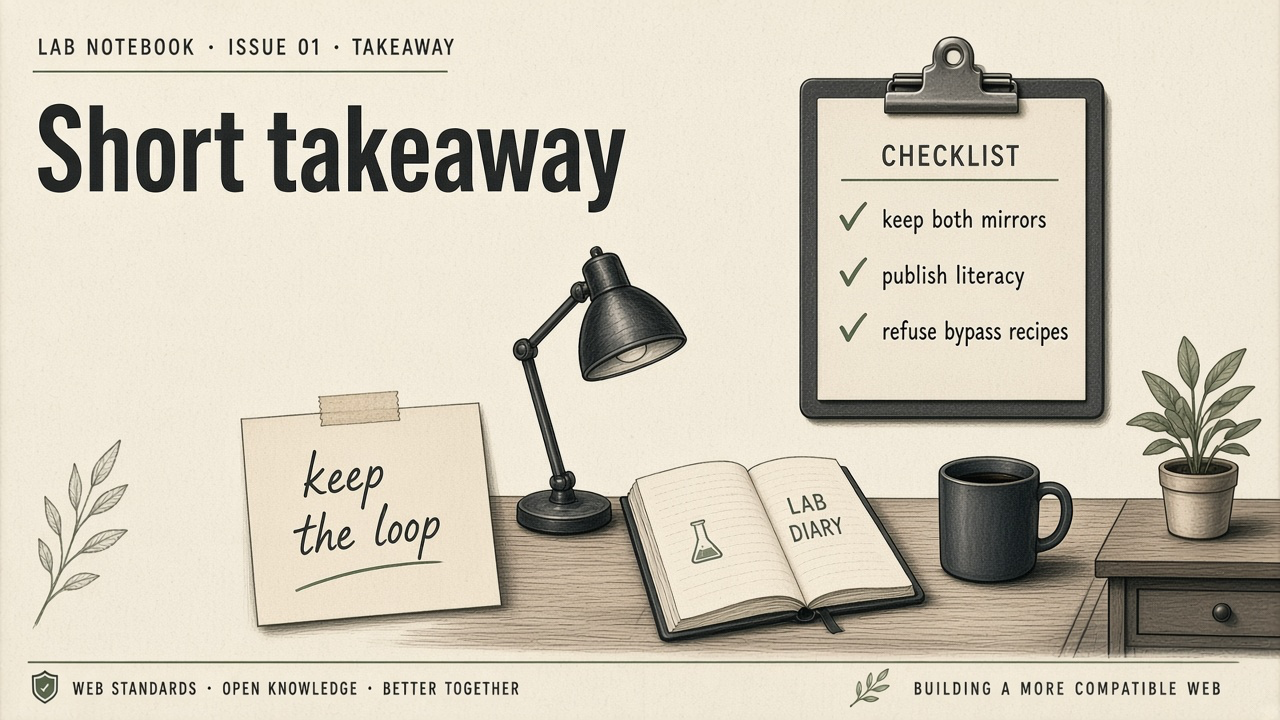
Short takeaway
Two mirrors are a way not to lie to myself. Detect without a controlled browser goes blind in theory. A browser without detect optimizes the wrong goal. I keep both contours so hypotheses are tested on me — fast, honestly, and without a theater of product war.
Later in the series I will fix the diary genre (why this is not “who outplayed whom”) and the main lab language: consistency instead of the cult of one hash.